Enrollment Management 2.0: Adapting Corporate Pipeline Strategies for Schools


Most admissions teams already know which families are interested. The harder question is what happens after: inquiries scattered across inboxes, follow-ups that depend on whoever remembers, and enrollment forecasts built on gut feel rather than data.
An enrollment pipeline is a structured system that tracks every prospective student from first inquiry through confirmed enrollment, with defined stages, clear ownership, and automated follow-ups at each step. It applies the same CRM (Customer Relationship Management) principles that corporate sales teams use, except the "lead" is a family exploring your school, and the "deal" is a confirmed seat.
This guide shows admissions teams at independent schools, charter networks, and competitive programs how to build that structure, ensuring enrollment becomes something you manage with visibility and control, not something that happens to you each cycle.
TL;DR: Schools that structure enrollment as a pipeline (with defined stages, automated follow-ups, and shared visibility across departments) convert more inquiries, lose fewer families between stages, and gain the ability to forecast outcomes before the cycle ends.
Why schools now compete like businesses
Prospective students and parents behave like informed buyers. They research multiple options, compare programs side by side, and pay close attention to responsiveness. Research from Lead Response Management found that the odds of qualifying a web-generated lead drop dramatically after the first five minutes — a dynamic that applies directly to admissions.
Most schools already do top-of-funnel work that mirrors customer acquisition: marketing campaigns, open houses, inquiry forms, referral programs. The breakdown happens after that:
-
Inquiry details end up scattered across inboxes, spreadsheets, and event sign-in sheets
-
Ownership is unclear — two people contact the same family, or no one follows up at all
-
There's no shared view of where each prospective student actually stands
Corporate teams solve this with structured CRM pipelines and shared systems. When schools apply the same logic, they shift from reacting to enrollment pressure to managing it.
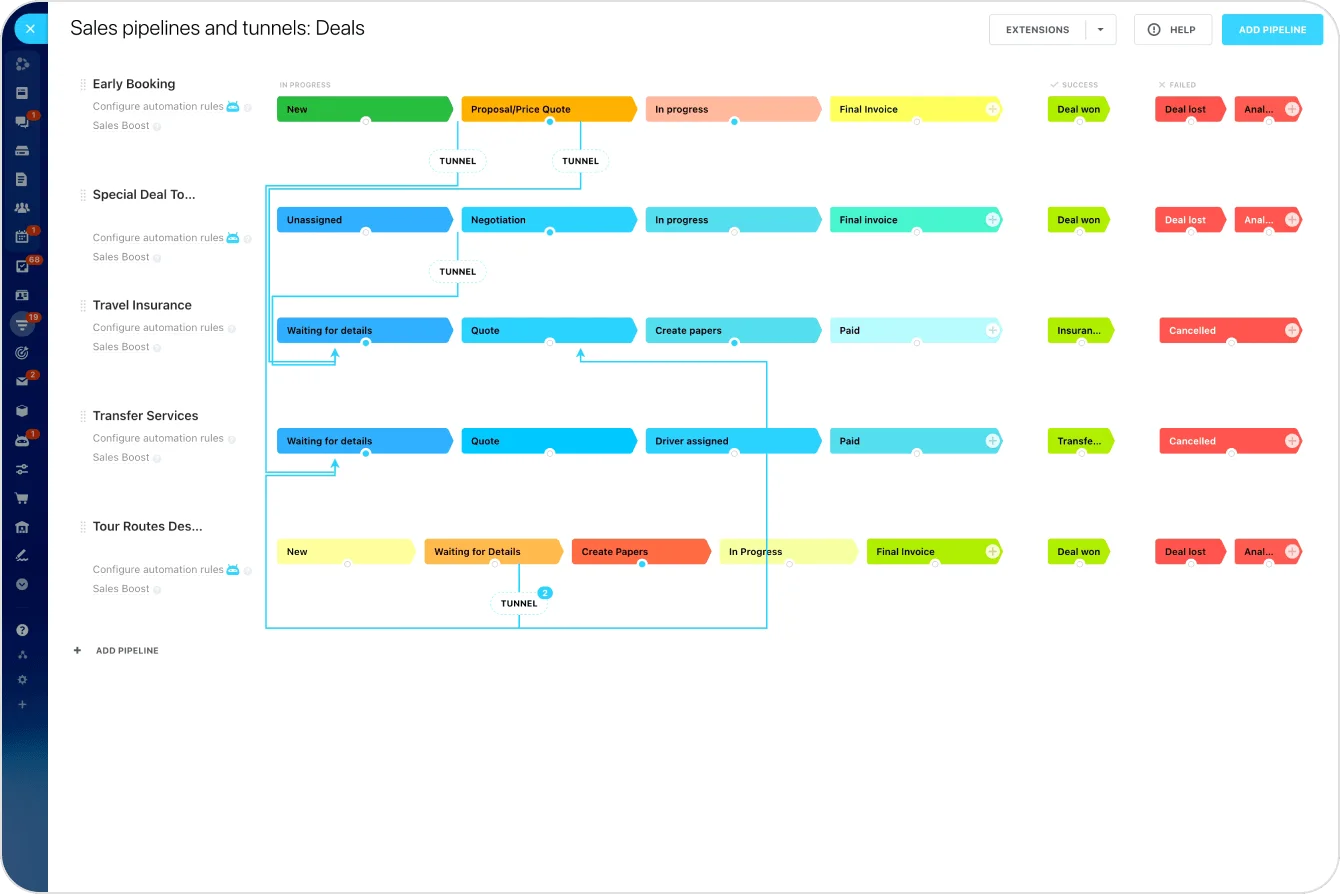
What are the core stages of an enrollment pipeline?
Every prospective student follows a journey before enrolling. In most schools, that journey exists in people's heads rather than in a system the whole team can see. Let’s take a look at the core stages of the enrollment pipeline now:
|
Stage |
What Happens |
Key Actions |
|---|---|---|
|
Inquiry |
A parent or student expresses interest via form, call, event, or referral |
Log the contact, confirm receipt, assign an owner |
|
Qualified Prospect |
Your team confirms fit — grade level, eligibility, timeline, program interest |
Initial outreach, answer questions, invite to tour or event |
|
Applicant |
Application started or submitted, documents in progress |
Track completion, send reminders for missing items, schedule interview |
|
Admitted |
Student receives an offer of admission |
Communicate next steps clearly, set acceptance deadline |
|
Enrolled |
Offer accepted, deposit paid, onboarding started |
Trigger welcome sequence, hand off to administration |
Pro tip: Keep it to five core stages. When schools create more than 6–7 stages, the system becomes more work to update than to use.
When stages are defined and consistently tracked, patterns become visible fast. You can see where families stall, which follow-ups drive progress, and where your cycle carries the most risk, weeks before it becomes a crisis.
Lead tracking: preventing the inquiry-to-silence gap
Every inquiry is an opportunity. Schools lose momentum when prospective student information lives in too many places and nowhere definitive.
What effective lead tracking looks like
Effective tracking gives your admissions team one complete profile per prospective student:
-
Contact details and preferred communication channel
-
Grade level, entry year, and program interest
-
Interaction history—emails, calls, campus visits, event attendance
-
Clear ownership so follow-up is never "someone else's job"
Why speed matters more than most teams realize
When you apply CRM principles to admissions, you stop relying on memory. You can see at a glance who needs a follow-up today, who's gone quiet after a tour, and who's ready to move forward.
And this speed difference is significant. Harvard Business Review research found that firms contacting prospects within an hour were nearly seven times more likely to have meaningful conversations than those that waited longer. For admissions teams fielding seasonal inquiry spikes, that speed is only practical with a structured system.
Bitrix24 makes this work by combining lead tracking, communication tools, and task management in one workspace, so every inquiry has an owner, a history, and a next step.

Pipeline management: from reactive to predictable
Tracking leads is the starting point. The real improvement comes from actively managing how students move through each stage. Without pipeline management, follow-ups happen late, deadlines creep up, and forecasts rely on gut feel. With a managed pipeline, your system shows you where attention is needed before delays become lost enrollments.
Spotting and fixing bottlenecks
Clear pipelines make friction visible quickly:
-
Applications started but never finished — often a sign of process complexity or missing guidance
-
Offers sent but responses delayed — usually indicating unresolved questions about financial aid or fit
-
Long gaps between tours and next contact — one of the biggest predictors of drop-off in most schools
Once you see these slowdowns, you can respond with targeted action — clearer instructions, better timing, personal outreach — rather than broad assumptions.
When pipeline management falls short
Of course, pipeline structure alone doesn't fix everything. If your admissions team lacks the capacity to act on what the pipeline reveals, visibility creates frustration rather than improvement. And if no one is accountable for moving stalled prospects forward, the pipeline becomes a reporting tool rather than an operational one.
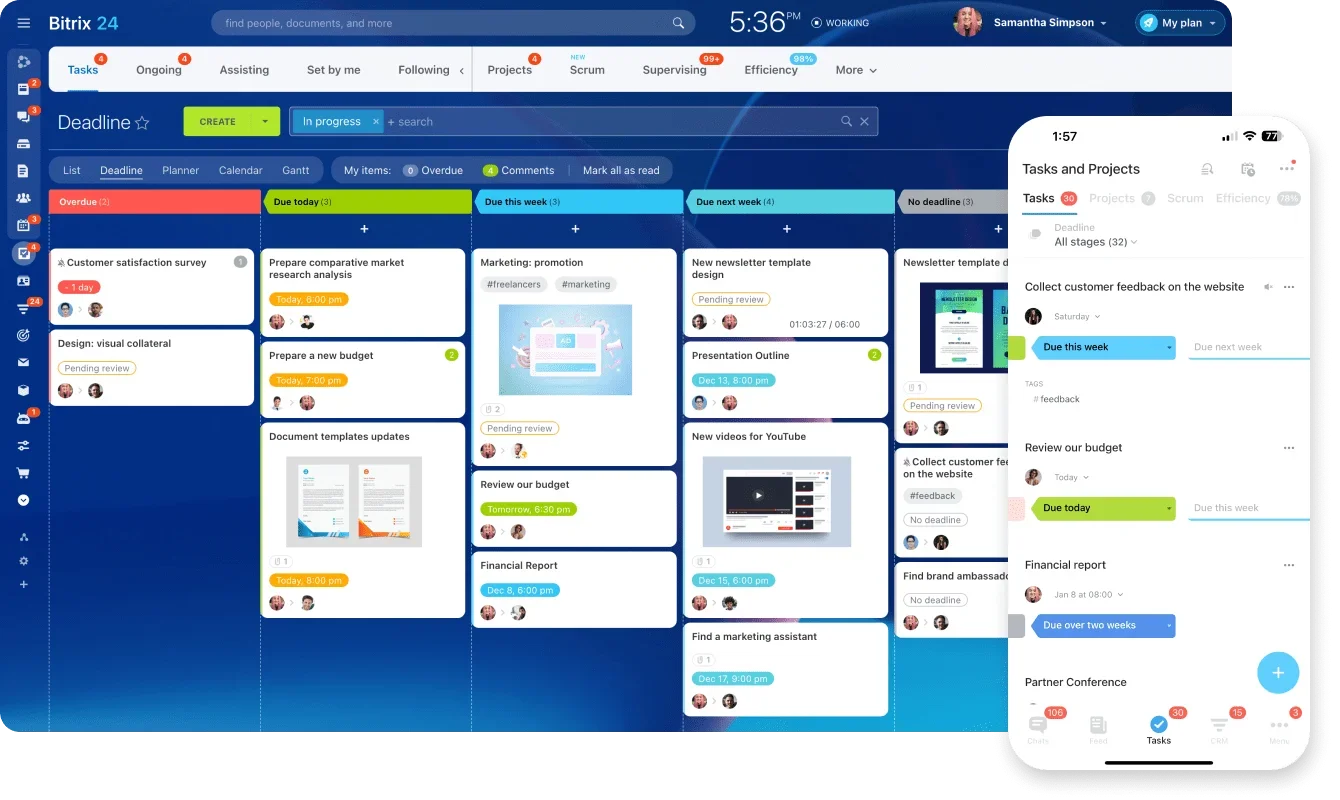
With Bitrix24, pipeline stages, tasks, and reminders work together, creating a more predictable enrollment flow and far less last-minute pressure.
When a full pipeline system may not be necessary
Not every school requires structured automation from day one. If your admissions office handles fewer than 15–20 applicants per cycle, has a single decision-maker, and communicates directly with every family in real time, a lightweight tracking method may be sufficient.
In very small programs:
-
Volume is low enough that no stage visibility is lost
-
Follow-ups happen personally and immediately
-
Forecasting can reasonably rely on direct conversations
However, the moment inquiry volume increases, staff responsibilities split, or application timelines overlap, informal tracking starts to break down. Most schools introduce structured pipelines not because they want complexity, but because growth makes visibility essential.
Enrollment Pipeline Planner: Corporate Funnel Templates for Schools
Enter your email address to get a comprehensive, step-by-step guide

Automation that supports rather than replaces your team
Automation in enrollment isn't about removing the human element; it's about ensuring no family feels forgotten during a process that can stretch weeks or months.
Well-timed automation handles the touchpoints that slip when volume spikes, including confirmation emails after an inquiry, reminders when an application sits incomplete, and status updates when a student moves stages. Your team still owns the moments that matter: personal conversations, complex questions about fit or funding, and the guidance that builds trust.
Here’s a quick breakdown of which enrollment tasks to automate, and which to keep human:
|
Task Type |
Automate |
Keep Human |
|---|---|---|
|
Inquiry acknowledgment |
Instant confirmation email with next steps |
— |
|
Application reminders |
Triggered at 7 and 14 days if incomplete |
Personal call if still incomplete after 21 days |
|
Tour/event invitations |
Automated based on pipeline stage |
Follow-up conversation after attendance |
|
Admission offer follow-up |
Deadline reminders at 7-day intervals |
One-to-one call to address concerns or questions |
|
Onboarding handoff |
Automated welcome sequence and document checklist |
Personal introduction to key staff |
Use case: A mid-size independent school reduces incomplete-application drop-off by implementing automated 7-day and 14-day reminders — with no additional staff time, because the system sent the reminders and only flagged overdue items for personal follow-up after 21 days.
Breaking down silos: admissions, marketing, and administration
Enrollment doesn't live in one department, but in many schools, the process is fragmented across teams using separate tools.
The three-team disconnect
-
Marketing generates interest but can't see which inquiries convert
-
Admissions manages conversations but loses context at handoffs
-
Administration handles records but waits on spreadsheet updates
When these teams operate in isolation, families feel the disconnect at the moments they need clarity most: after a tour, during the application window, or while weighing an offer.
What a shared system changes
A single workspace means marketing sees which campaigns generate qualified inquiries, admissions tracks progress without losing context, and administration accesses accurate enrollment data in real time.
Bitrix24 supports this by bringing CRM, communication, tasks, and document management into one connected workspace where every team works from the same information.How do you measure whether your enrollment pipeline is working?
When your pipeline is structured, data becomes one of your most useful tools. Instead of guessing, you can see what's happening (and act before the cycle ends). Let’s look at five key metrics you should be tracking, what each reveals, and their attendant action signals:
|
Metric |
What It Reveals |
Action Signal |
|---|---|---|
|
Inquiry-to-application rate |
Whether early follow-up is effective |
Low rate → review response time and messaging clarity |
|
Application completion rate |
Whether the process creates unnecessary friction |
Low rate → simplify requirements, add reminders |
|
Time in each stage |
Where families stall |
Long dwell time → targeted outreach or process change |
|
Offer acceptance ratio |
How competitive your offers are |
Low ratio → review financial aid communication, visit experience |
|
Source-to-enrollment conversion |
Which channels produce students who actually enroll |
Low conversion from a high-volume source → reallocate effort |
Pro tip: Don't just track the final enrollment number. Stage-to-stage conversion rates reveal where your process is leaking, and those are the problems you can fix mid-cycle rather than discovering them after enrollment closes.
With Bitrix24's analytics and reporting tools, these metrics pull from pipeline activity automatically. No end-of-cycle spreadsheet assembly required!
Getting started: four practical steps
Modernizing enrollment doesn't require an overnight overhaul. Schools that do this well start small and improve each cycle.
-
Map your current process. Document where inquiries come from, how follow-ups happen, and where ownership is unclear.
-
Define stages and next-step rules. Agree on what qualifies a real prospect, what counts as an active application, and what must happen after an offer. Even simple definitions prevent leads from stalling.
-
Fix one friction point at a time. Identify where families drop out and address the highest-impact issue first.
-
Choose tools that scale. Start with basic lead tracking, then expand into automation, analytics, and cross-team collaboration as your process matures.
Bring structure to your admissions process and give every prospective family the experience they expect. Start for free with Bitrix24 today.
Bitrix24: Modernize Enrollment Process
Streamline your school admissions with Bitrix24's powerful CRM tools. From lead tracking to automation, make enrollment management more efficient and predictable.
Get Started NowFrequently asked questions
How can CRM improve student retention rates?
A CRM doesn't stop at enrollment. By tracking student and family engagement after admission (communication frequency, event attendance, support requests), you can identify disengagement signals early and intervene before a student withdraws. Schools that extend their pipeline into a retention stage gain visibility into at-risk students the same way the admissions pipeline surfaces at-risk prospects.
Can we use CRM for alumni fundraising?
Yes. The same contact management, segmentation, and communication tracking that supports admissions works for alumni relations. You can segment alumni by graduation year, giving history, event attendance, or engagement level, then automate personalized outreach for annual funds, capital campaigns, or reunion events. Bitrix24's CRM fields and automation rules adapt to fundraising workflows without requiring a separate system.
Is it possible to segment communications for parents vs. students?
Absolutely. A CRM-based system lets you create separate contact profiles for students and their parents, tag each by role, and route different messages accordingly. For example, application status updates might go to the student, while financial aid information goes to a parent. In Bitrix24, custom fields and segmentation rules make this straightforward to configure and automate.
How long does it take to set up an enrollment pipeline in a CRM?
Most schools can build a functional pipeline in one to two weeks: mapping stages, defining rules, importing inquiry data. Configuration in Bitrix24 typically takes a few hours once those decisions are made. The longer investment is team adoption: expect two to three enrollment cycles before the process feels fully embedded.
Can a small admissions team benefit from pipeline automation?
Small teams often benefit the most. When one or two people handle the entire process, routine tasks like inquiry confirmations and application reminders are the first things to slip during busy periods. Automation handles those touchpoints reliably, so a small team maintains consistent follow-up at the same quality as a larger office. Bitrix24's free tier includes CRM and basic automation, so there's no budget barrier.
How do I measure whether my enrollment pipeline is actually working?
Track conversion rates between each stage, not just the final enrollment number. If inquiry-to-application rate is below 30–40%, early follow-up or messaging needs attention. If application completion sits below 70%, the process may be too complex or reminders are missing. Monitor time-in-stage to spot stalls, and compare source-to-enrollment conversion to see which channels produce enrollments versus just volume.