Building a Robust Sales Pipeline with Bitrix24


Understanding how to build a sales pipeline separates thriving sales teams from those constantly chasing unpredictable revenue. A well-structured pipeline acts as your strategic roadmap, guiding potential customers from initial contact through to closed deals while providing you with complete visibility into what's working and what needs attention.
The difference between random sales activity and systematic revenue growth comes down to pipeline management. When you know exactly where each prospect stands, what actions move them forward, and which deals deserve your attention, you stop hoping for results and start engineering them.
Bitrix24 provides everything you need to build, manage, and optimize your sales pipeline in one platform. From automated lead capture to visual deal tracking, the tools work together to create a seamless system that scales with your business. This guide walks through exactly how to construct a pipeline that drives consistent conversions.
Why Every Business Must Learn How to Build a Sales Pipeline
A sales pipeline is more than a fancy term for your list of potential customers. It's a visual representation of where prospects sit in your buying journey and what needs to happen next. Without this structure, sales teams operate reactively - responding to whatever lands in their inbox rather than proactively moving deals toward closure.
Performance depends entirely on structure. Teams that understand how to build a sales pipeline consistently outperform those relying on gut instinct and scattered spreadsheets. The pipeline provides clarity on deal values, expected close dates, and resource allocation. Sales managers can identify problems before they become crises, and individual reps know exactly where to focus their energy each day.
Revenue predictability comes from pipeline visibility. When you can see that 40% of deals stall at the proposal stage, you know where to invest training resources. When average deal velocity drops, you catch it early enough to course-correct. This level of insight transforms sales from an art into a science - still requiring skill and relationship-building, but grounded in data that guides decisions.
The stakes are straightforward: companies with defined sales processes generate more revenue than those without. Building a proper pipeline isn't optional for businesses serious about growth.

How to Build a Sales Pipeline: The Stages That Matter
Every sales pipeline follows a basic progression, though the specific stages should mirror your actual selling process. The standard framework includes prospecting, qualification, proposal, negotiation, and closing - but these aren't arbitrary categories. Each stage represents a distinct buyer mindset and requires different sales activities.
Prospecting captures new potential customers entering your world. These might come from marketing campaigns, referrals, cold outreach, or website inquiries. At this stage, you know very little about fit or intent. The goal is simply to gather enough information to determine whether someone deserves further attention.
Qualification separates serious buyers from tire-kickers. This is where your sales qualification framework comes in: you assess budget, authority, need, and timeline. Not every prospect deserves a full sales effort. A clear qualifying step protects your team’s time by highlighting the opportunities with real potential.
Proposal moves qualified prospects toward a specific solution. You've diagnosed their problem, understood their constraints, and now present how you solve their challenge. This stage often involves demos, custom quotes, or detailed scope documents.
Negotiation handles objections, pricing discussions, and contract terms. Some deals sail through this stage quickly; others require multiple rounds of back-and-forth. The key is maintaining momentum while addressing legitimate concerns.
Closing converts opportunities into customers. Contracts get signed, payments are processed, and deals move from pipeline to revenue.
Stage lengths vary dramatically by industry. A SaaS company selling $50/month subscriptions might complete the entire sales funnel process in 48 hours. Enterprise software deals often span 6-12 months. Understanding your typical cycle times for each stage helps set realistic expectations and spot deals that are moving too slowly.
When learning how to build a sales pipeline from scratch, start with these five core stages, then customize based on your specific sales motion. Some businesses add stages like "demo scheduled" or "contract review" to capture important milestones. Others collapse stages for simpler transactions. The right structure reflects how you actually sell.

Tools That Simplify Building Your Sales Pipeline
Manual pipeline management - spreadsheets, sticky notes, memory - works until it doesn't. As deal volume grows, the limitations become painful. Opportunities slip through cracks, follow-ups get missed, and managers lack visibility into team performance.
A CRM for sales pipeline management eliminates these problems by centralizing everything in one system. Customer information, interaction history, deal status, and next steps all live in a single platform accessible to everyone who needs it. No more hunting through email threads or asking colleagues what happened on their last call.
Bitrix24's CRM provides the foundation for effective pipeline management. Every lead, contact, and deal connects to a visual pipeline where you drag opportunities between stages as they progress. The system maintains a complete history, so anyone on your team can pick up a conversation without the customer repeating themselves.
The deal tracking system goes beyond simple status updates. You see deal values at each stage, expected close dates, and probability-weighted forecasts. Custom fields capture the specific information your business needs - whether that's product interests, competitor mentions, or implementation requirements.
Automation removes the repetitive work that bogs down sales teams. When a lead completes a website form, Bitrix24 can automatically create a contact record, assign it to the right rep based on territory or product interest, schedule a follow-up task, and send an initial email - all without manual intervention. These workflows ensure consistent processes even as teams scale.
Integration capabilities connect your pipeline to other business tools. Email conversations sync automatically. Calendar meetings link to deal records. Marketing campaign data shows which channels generate your best opportunities. This connected ecosystem means your pipeline reflects reality rather than requiring constant manual updates.
Take control of your notifications, don't let them control you
The new Bitrix24 notification system filters out the noise and highlights what's critical. Prioritize alerts, mute the unnecessary, and focus without distraction.
Start Without the NoiseHow to Build a Sales Pipeline with Automated Lead Capture
Leads enter your pipeline from numerous channels - website forms, advertising campaigns, email inquiries, social media engagement, trade show contacts, and referrals. Without systematic capture, valuable opportunities scatter across different inboxes and systems, making consistent follow-up nearly impossible.
Automated lead capture ensures every potential customer enters your pipeline immediately and receives appropriate attention. Bitrix24 connects to your lead sources, pulling new contacts directly into the CRM without manual data entry. Website visitors who fill out forms appear as leads within seconds. Social media inquiries route into the same system. Even business cards scanned at events can flow into your pipeline automatically.
The lead management workflow begins the moment someone enters your system. Rules you define determine what happens next. A lead from your pricing page might receive higher priority than one from a blog post. Inquiries about enterprise solutions might route to senior reps, while SMB leads go to inside sales. Geographic regions, product interests, and company sizes can all trigger different assignment rules.
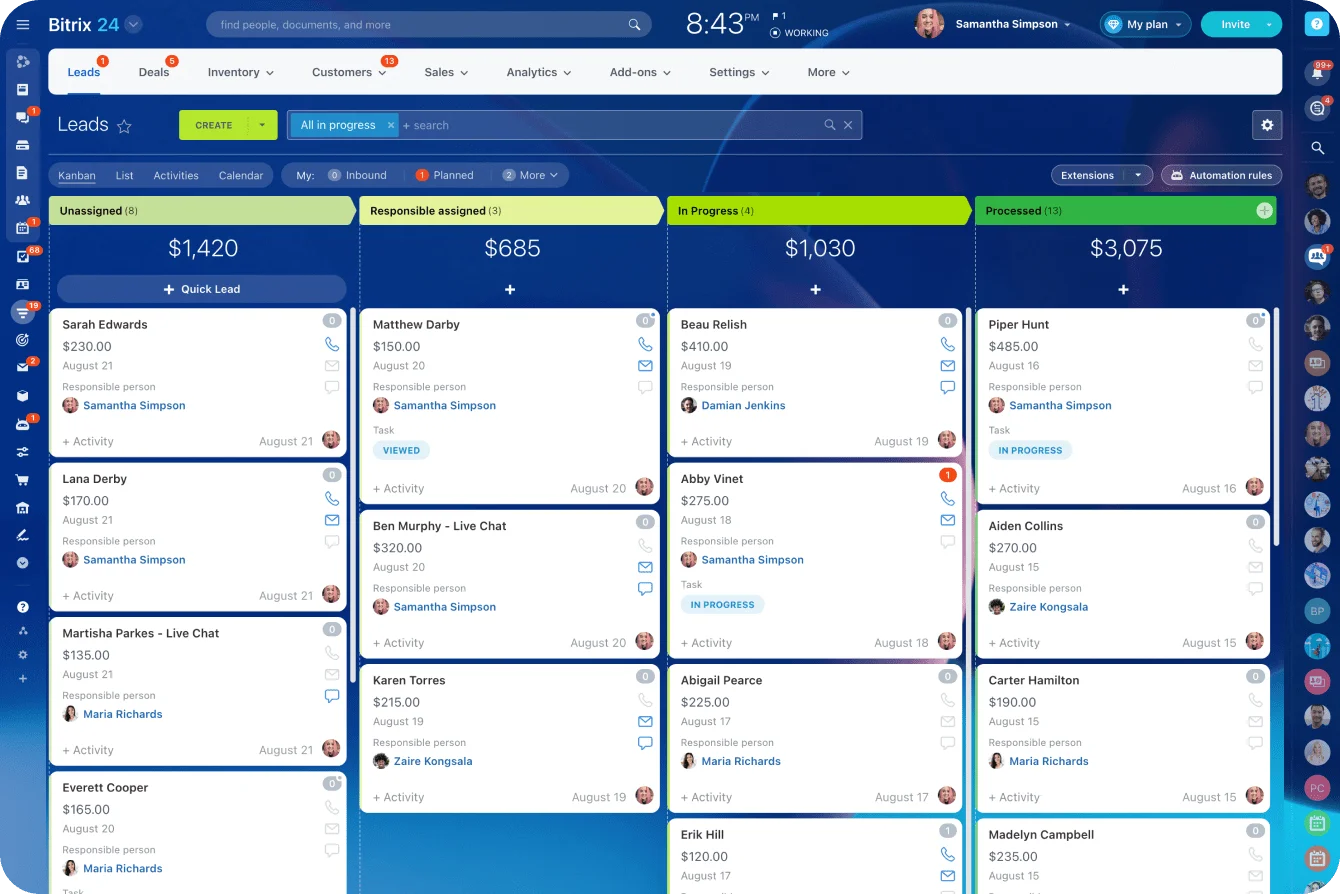
Segmentation organizes leads into meaningful groups for targeted follow-up. Rather than treating every prospect identically, you can create sequences specific to different buyer types. Technology companies receive different nurture content than manufacturing firms. Decision-makers see different messaging than influencers. This segmentation happens automatically based on information captured during lead creation.
Lead scoring adds another layer of intelligence to the prioritization process. Points accumulate based on demographic fit and engagement behavior. A VP at a company in your target market who downloads multiple resources and attends a webinar scores higher than someone who submitted a form but never opened follow-up emails. These scores help reps focus on prospects most likely to convert rather than working leads in the order they arrived.
Building this automated capture system transforms how sales teams operate. Instead of spending hours on data entry and manual organization, reps receive a steady stream of prioritized, segmented leads ready for outreach. The time saved goes directly into revenue-generating activities.
How to Qualify Leads Consistently Inside Your Pipeline
As previously mentioned, not every lead deserves equal attention. Some will never buy - wrong budget, wrong timing, wrong fit. Others represent significant opportunities that warrant concentrated effort. The challenge is distinguishing between them quickly and accurately.
Your sales qualification framework provides the criteria for this evaluation. Common approaches include BANT (Budget, Authority, Need, Timeline), MEDDIC (Metrics, Economic Buyer, Decision Criteria, Decision Process, Identify Pain, Champion), or variations tailored to your specific market. The framework itself matters less than consistent application across your team.
Bitrix24 supports systematic qualification through custom fields and required information at each pipeline stage. Before a lead can progress from qualification to proposal, reps might need to confirm the budget range, identify the decision-maker, and document the specific problem being solved. These requirements ensure qualification happens rather than hoping reps remember to ask the right questions.
Behavioral signals complement explicit qualification conversations. Engagement patterns reveal intent that prospects might not verbalize. Someone visiting your pricing page repeatedly signals stronger buying interest than someone who glanced at a single blog post. Email opens, link clicks, webinar attendance, and content downloads all indicate engagement levels. Bitrix24 tracks these interactions and can adjust lead scores automatically based on activity.
Triggers define what moves leads between stages. A qualification call scheduled might transition someone from prospecting to active qualification. A confirmed budget conversation could advance them to the proposal stage. Defining these triggers removes ambiguity about pipeline status and ensures movement reflects genuine progress rather than optimistic thinking.
The goal isn't creating bureaucratic hurdles that slow down deals. It's establishing clear criteria that help reps invest time wisely and provide managers with accurate pipeline data. Well-qualified pipelines convert at higher rates because unwinnable deals get filtered out early, leaving more resources for opportunities with real potential.
Forecasting Metrics Every Pipeline Must Track
Building a pipeline creates the structure; measuring it reveals what's actually happening. Without metrics, you're flying blind - unable to predict revenue, identify problems, or prove what works.
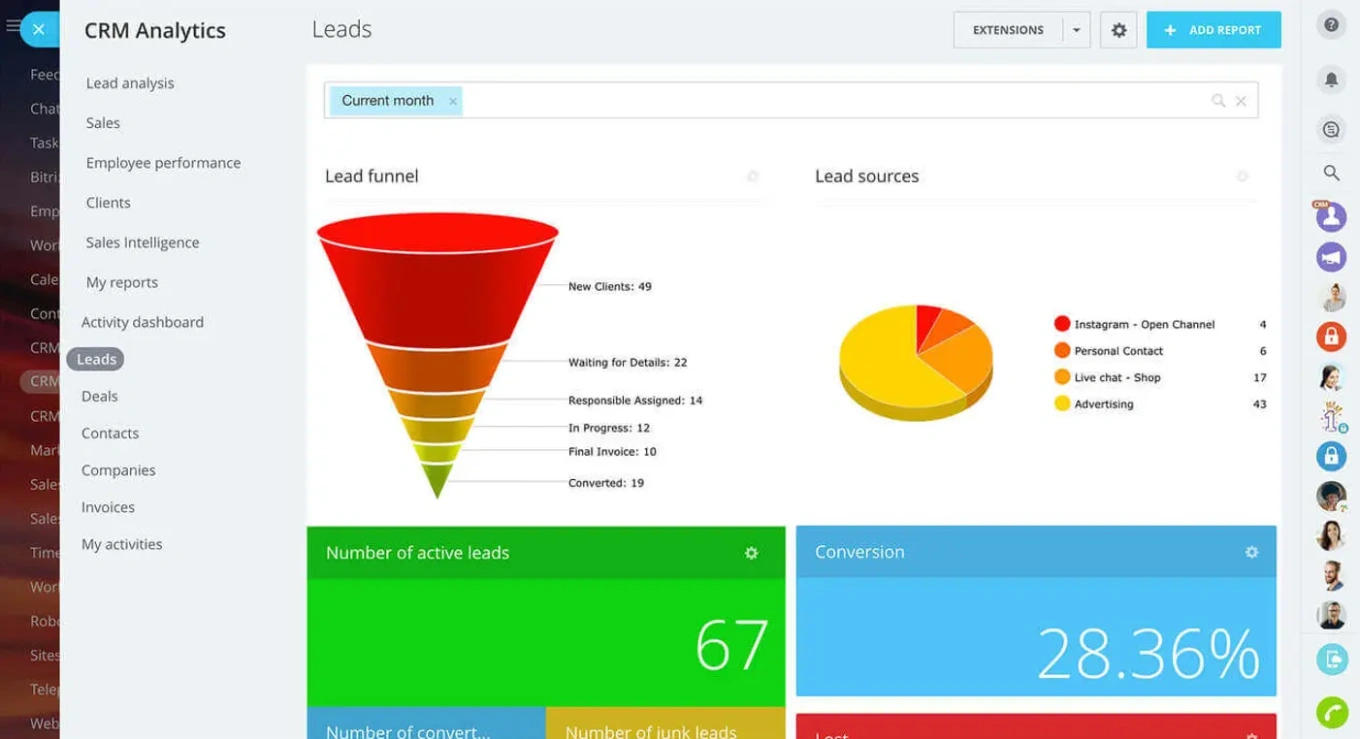
A proper pipeline analytics dashboard tracks several key indicators. Conversion rates between stages show where deals accelerate and where they stall. If 80% of qualified leads receive proposals but only 20% of proposals close, you've identified where improvement efforts should focus. Stage-by-stage conversion analysis pinpoints specific weaknesses in your sales process.
Deal velocity measures how quickly opportunities move through your pipeline. Average days per stage reveals bottlenecks. If qualification typically takes 5 days, but some deals sit there for 30, those stuck opportunities need attention. Velocity trends over time show whether process changes actually speed up sales cycles.
Win rates by rep, product, lead source, and deal size provide granular performance insights. Maybe your team closes enterprise deals at twice the rate of SMB opportunities - suggesting where to focus prospecting. Leads from webinars might convert better than those from paid advertising, guiding smarter marketing budget allocation. These breakdowns turn raw pipeline data into actionable intelligence.
Your sales forecasting model uses pipeline data to predict future revenue. Bitrix24 calculates weighted forecasts based on deal values and stage probabilities. A $100,000 deal in the negotiation stage with an 80% close probability contributes $80,000 to your forecast. Aggregating these weighted values across all deals produces revenue projections for weeks and months ahead.
Stuck-deal analysis identifies opportunities that have stopped progressing. Deals sitting in any stage beyond normal timeframes require intervention. The prospect may have gone dark and needs re-engagement. Perhaps objections emerged that weren't properly addressed. Automatic alerts for stalled deals ensure no opportunity quietly dies from neglect.
These metrics transform pipeline management from subjective assessment to objective analysis. You stop guessing and start knowing.
Aligning Marketing and Sales to Strengthen Your Pipeline
Marketing generates leads; sales converts them. When these functions operate in silos, opportunities slip through the cracks. Leads captured by marketing campaigns languish without follow-up. Sales reps chase unqualified prospects that marketing should have filtered. Neither team takes responsibility for pipeline health.
Bitrix24 connects marketing and sales activities in a shared system, eliminating the handoff problems that plague disconnected teams. Marketing campaigns link directly to lead records, showing which channels and messages generate pipeline opportunities. Sales outcomes feed back to marketing, revealing which campaigns produce customers instead of just contacts.
Shared analytics create accountability on both sides. Marketing sees not just lead volume but lead quality - how many of their generated contacts actually progress through the pipeline and convert. Sales sees attribution data showing which marketing efforts deserve credit for opportunities. Such shared visibility encourages collaboration rather than finger-pointing.
Campaign attribution tracks the full customer journey from first touch to closed deal. A prospect might initially click a paid ad, then download an ebook, attend a webinar, and finally request a demo before buying. Understanding this full path helps optimize marketing spend and sales follow-up timing.
Lead nurturing bridges the gap between marketing-generated interest and sales-ready opportunities. Not every lead is ready to buy immediately. Automated nurture sequences maintain engagement over time, educating prospects about their problems and your solutions until they're ready for a sales conversation. Bitrix24's marketing automation handles this nurturing, warming leads until behavioral signals indicate sales readiness.
When marketing and sales share pipeline ownership, results improve for both teams. Marketing focuses on generating leads that actually convert. Sales receives better-prepared prospects. The pipeline benefits from this alignment at every stage.
Best Practices for Anyone Learning How to Build a Sales Pipeline
Creating a pipeline structure is the starting point. Maintaining a healthy, accurate pipeline requires ongoing attention and discipline.
Weekly pipeline reviews keep deals up to date and surface problems early. Block dedicated time for your team to walk through active opportunities, update statuses, and discuss stuck deals. These reviews catch stale data, identify coaching opportunities, and ensure everyone knows pipeline priorities for the coming week.
Data hygiene matters more than most teams realize. Duplicate records create confusion. Outdated contact information leads to missed connections. Incomplete deal records prevent accurate forecasting. Establish standards for data entry and periodically audit your CRM to maintain quality. Bitrix24's merge and cleanup tools help manage duplicates and standardize records.
Stage definitions need clarity and consistency. When does a lead become qualified? What criteria advance an opportunity from proposal to negotiation? Document these definitions and train your team on them. Ambiguous stage criteria produce unreliable pipeline data.
Automation should support human judgment, not replace it. Set up workflows that handle routine tasks - assignments, reminders, notifications - so reps can focus on relationship-building and problem-solving. But maintain human oversight of deal progression and qualification decisions.
Pipeline cleanup prevents the accumulation of dead opportunities. Deals that haven't progressed in months clog your system and distort metrics. Establish rules for when to mark opportunities as lost and archive them. A clean pipeline accurately reflects current reality rather than historical optimism.
Continuous optimization treats your pipeline as a living system. What worked six months ago might not serve you today. Monitor metrics, test changes, and iterate. The best sales organizations never stop refining how they build and manage their pipelines.
Put Your Pipeline Strategy Into Action with Bitrix24
Knowing how to build a sales pipeline provides the foundation. Executing that knowledge with the right tools determines results. Bitrix24 delivers the complete platform for constructing a pipeline that drives predictable revenue growth.
The CRM centralizes every customer interaction and deal detail in one accessible system. Visual pipelines let you drag opportunities between stages while maintaining complete history. Automation handles lead capture, assignment, and follow-up without manual effort. Analytics dashboards reveal exactly what's happening across your sales organization.
Whether you're building your first pipeline or upgrading from spreadsheets and scattered tools, Bitrix24 provides the infrastructure for systematic sales management. The platform scales from solo entrepreneurs to enterprise teams, adapting to your specific sales process and business requirements.
Get started with Bitrix24 today and transform how your team manages opportunities. See why so many businesses worldwide trust Bitrix24 to power their sales operations.
Sell smarter with Bitrix24 CRM!
Close more deals with sales automation, real-time tracking, and AI-powered insights – all available inside Bitrix24 CRM.
START NOW FREEFAQs
What steps are required when learning how to build a sales pipeline?
The steps required when learning how to build a sales pipeline include defining your stages (prospecting, qualification, proposal, negotiation, closing), selecting a CRM platform to manage deal tracking, establishing qualification criteria for advancing opportunities, setting up automated lead capture from your various channels, and creating metrics dashboards to monitor performance. Start with the basic framework, then customize stages and automation rules based on your specific sales process.
How long does it take to implement how to build a sales pipeline successfully?
Implementation time for learning how to build a sales pipeline successfully varies based on complexity and team size. A small team can establish a basic pipeline structure within a few days using a platform like Bitrix24. Fully optimizing the system - including automation rules, custom fields, integrations, and team training - typically takes 2-4 weeks. Enterprise implementations with complex requirements may extend to several months for complete rollout.
Which tools help teams build a sales pipeline more efficiently?
Tools that help teams build a sales pipeline more efficiently include CRM platforms with visual pipeline management, lead scoring capabilities, automation engines for repetitive tasks, and built-in analytics dashboards. Bitrix24 combines all these functions in a single platform, eliminating the need to piece together multiple systems. Look for tools offering customizable stages, automated lead capture, email integration, and robust reporting.
What metrics should I track once I build a sales pipeline from scratch?
Metrics to track once you build a sales pipeline from scratch include conversion rates between stages, average deal velocity, win rates by rep and lead source, pipeline value at each stage, and forecast accuracy. Monitor how long deals spend in each stage to identify bottlenecks. Track stuck deals that haven't progressed within normal timeframes. These measurements reveal pipeline health and guide improvement efforts.
How do I automate my sales pipeline without losing the personal touch?
To automate your sales pipeline without losing personal touch, focus automation on administrative tasks rather than relationship activities. Automate lead assignment, follow-up reminders, data entry, and status notifications. Keep personal outreach, discovery conversations, and negotiation discussions as human-driven activities. Bitrix24's automation handles the routine work while giving reps more time for meaningful prospect interactions that build trust and close deals.