From Reel to Repeat Buyer: 9 Steps to Create a High-Converting Social CRM Funnel in 24 Hours

Social feeds, DMs, and comment sections have quietly become the new front door to customer relationships. Buyers scroll, tap, and message; rarely do they navigate to a website first. Your next customer might discover your brand through a 15-second Reel, drop a question in the comments, and expect an answer before they swipe to the next post. The entry point has shifted, and building a social CRM funnel that captures these moments is now central to any serious sales strategy.
Here's the problem most teams face: engagement numbers look strong, but revenue doesn't follow. Comments pile up. DMs sit unanswered for hours. Leads slip through the cracks between Instagram and the sales team's spreadsheet. Conversion leaks happen precisely at the handoff between platforms - where someone moves from interested viewer to potential buyer, but nothing routes them into a structured sales process.
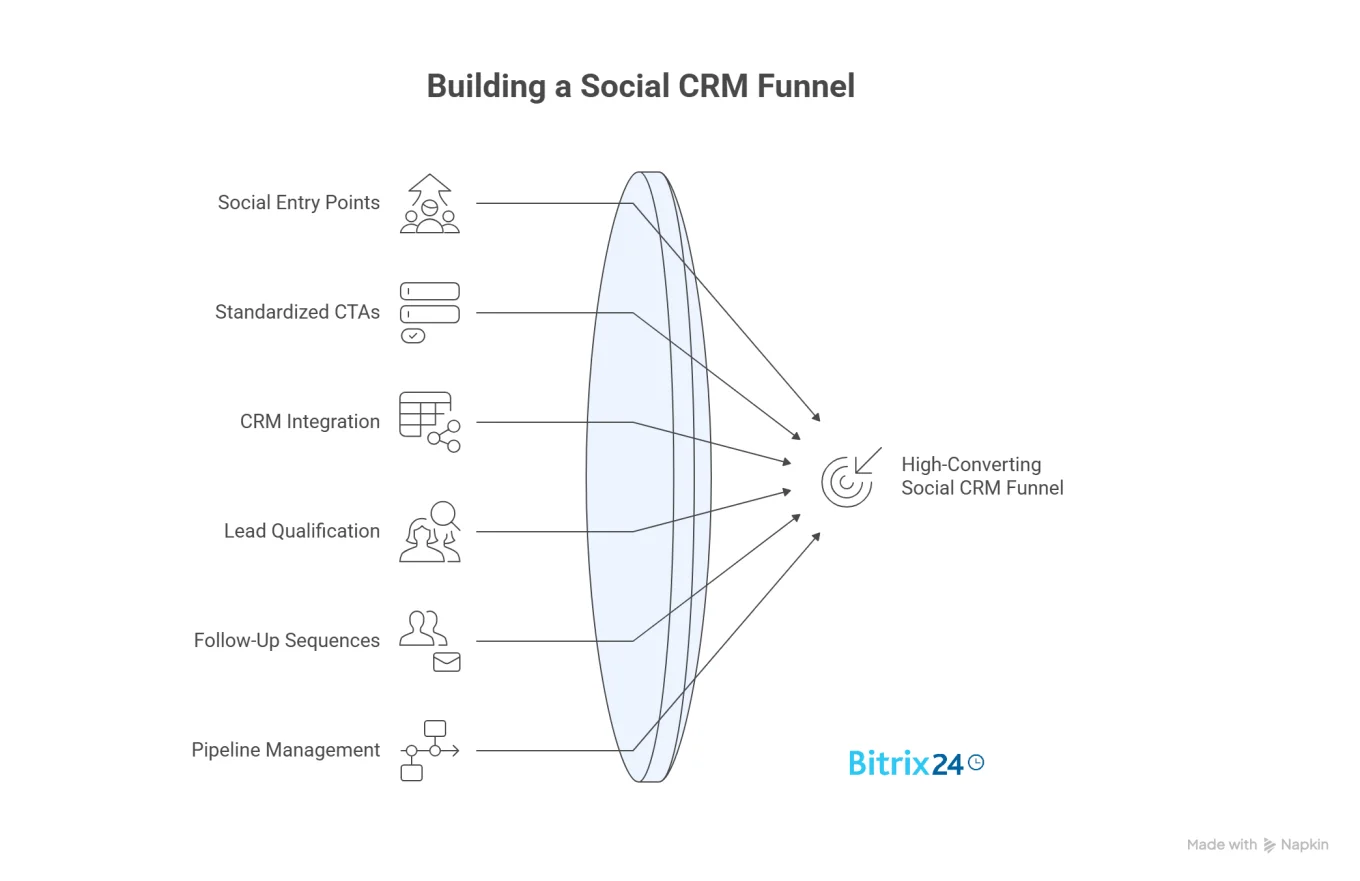
A social CRM funnel solves this gap. It means routing every social interaction - every comment, DM, Story reply, and live question - into defined CRM stages where contacts are captured, qualified, nurtured, and converted. The concept is simple: treat social touchpoints as CRM entry events, not isolated conversations floating in separate inboxes.
A well-structured social CRM funnel compresses the distance between content consumption, first contact, qualification, and purchase into a 24-hour sales cycle. When someone engages with your content in the morning, they should receive a personalized follow-up by noon and a clear next step by evening. This speed matters because attention fades fast. A prospect who commented yesterday is already watching competitor content today.
This guide breaks down nine steps to build a high-converting social CRM funnel in one day, from mapping entry points to measuring full-loop attribution. Together, these steps form a system that captures, qualifies, and converts social traffic into recurring revenue.
Convert Comments into Customers with Bitrix24
Stop losing leads in DMs and comments. Build a Social CRM funnel that captures every interaction, routes it to sales, and nurtures prospects into repeat buyers—all within a single day.
Build Your Social CRM FunnelStep 1: Map Your Social Entry Points
Every platform offers multiple formats, and each format attracts a different type of engagement. Reels, TikToks, and YouTube Shorts generate high passive views but fewer direct conversations. Stories and Lives invite real-time interaction. Comments sit in a gray zone - public enough to spark curiosity, private enough that people often ask genuine questions.
Start by listing every format where your brand appears: Reels, TikToks, Shorts, Stories, Lives, static posts, comment threads, and DMs. Identify which ones spark actual conversations versus those generating passive views. A Reel might rack up views but produce zero inquiries, while a simple Story poll could flood your inbox with replies.
Align each entry point with a specific CRM goal. Content that generates curiosity should route to lead capture. Posts that answer common objections serve nurture functions. Product showcases aim directly at sales. This mapping ensures that traffic from each format lands in the right CRM funnel stage from the start.
Step 2: Standardize Your Micro-CTAs for Each Format
Generic calls to action don't translate well in social-native environments. "Learn more" or "Visit our website" interrupt the scroll behavior buyers are already in. Micro-CTAs work better - small, low-friction prompts that fit the native behavior of each platform.
Think keyword triggers like "DM me PRICE for details," tap-action Story stickers, quick reply buttons in DMs, or simple questions inviting responses. These micro-CTAs reduce manual handling because every incoming message follows a recognizable pattern. Your team knows exactly what triggered the conversation.
Consistent prompts also boost attribution accuracy. When someone DMs "DEMO," you immediately know they came from the Reel featuring that keyword. This clarity feeds your marketing automation systems and helps you understand which content drives the pipeline. Frictionless messages such as"Reply with your biggest challenge" or "Tap here for a quick audit" push people into the funnel without asking them to leave the platform.
Step 3: Route Every Social Interaction into the CRM Automatically
Manual logging kills velocity. If reps need to copy contact details from Instagram, paste them into a spreadsheet, then create a CRM record, hot leads cool off before anyone follows up. The handoff between social platforms and your CRM should be invisible.
Connect Instagram, WhatsApp, Facebook Messenger, and website chat to one omnichannel inbox. Every incoming message, regardless of source, lands in the same unified view. From there, auto-create contacts and assign source tags so your social CRM funnel knows exactly where each lead originated.
This routing transforms scattered conversations into a structured pipeline. A DM on Instagram becomes a CRM contact within seconds. A WhatsApp inquiry triggers lead creation with the channel already tagged. Your team stops hunting across apps and starts working from a single source of truth. Social commerce depends on this speed - buyers expect instant acknowledgment, not a callback tomorrow.
Step 4: Qualify Leads Quickly with Short Diagnostic Questions
Long intake forms break the conversational rhythm buyers expect in social channels. A chat-based qualification flow works better: two or three quick questions that reveal intent and readiness without requiring the prospect to click through to an external page.
Light, conversational questions do the heavy lifting. "What's your timeline - this month or exploring options?" tells you urgency. "What's your budget range?" separates window shoppers from serious buyers. "Are you the decision-maker?" surfaces potential blockers early.
Set clear criteria for fast triage. High-intent signals (short timeline, confirmed budget, decision authority) push leads into active sales stages. Lower-intent signals route to nurture sequences. Lead scoring happens organically through the conversation, and your mobile CRM updates in real time, so reps see qualification status before they even pick up the thread.
Step 5: Send Instant Follow-Up Sequences That Match Buyer Intent
Personalization rules govern what occurs after someone enters your social CRM funnel. A new follower receives a different message than someone who commented with a buying question. An engager who watched your Live gets a different sequence than a DM initiator asking about pricing.
Short sequences work best - three to five messages that educate, demonstrate value, or offer a clear next step. Avoid long nurture drips that feel disconnected from the original interaction. The goal is momentum, not information overload.
Why does the 24-hour window matter? Conversion momentum peaks right after engagement. Studies on consumer attention consistently show that interest decays rapidly. Conversion automation must fire immediately, delivering relevant content while the buyer still remembers why they reached out. A prospect who receives a helpful response within an hour is far more likely to convert than one who waits until the next business day.
Is your CRM ready? Check the guide
Enter your email to download a guide that will help you get started with any CRM system.
Step 6: Move Prospects into a Clear CRM Pipeline
Social-origin leads behave differently from website form submissions or cold outreach responses. They arrive warmer but less formally qualified. Your CRM pipeline stages should reflect this reality.
Create deal stages adapted to social leads within your social CRM funnel: Initial Inquiry, Qualified Interest, Proposal Sent, Negotiation, Closed. Define what "progress" looks like at each stage - what action or signal moves someone forward? A response to your qualifying questions advances them from an Initial Inquiry. A product demo booking pushes them into Proposal territory.
The handoff from social platform to CRM should preserve context. When a rep opens a deal, they should see the original DM thread, the source content, and the qualification responses. CRM retention improves when reps understand the buyer's journey before picking up the conversation, rather than starting cold.
Step 7: Automate Tasks, Reminders, and SLA Rules
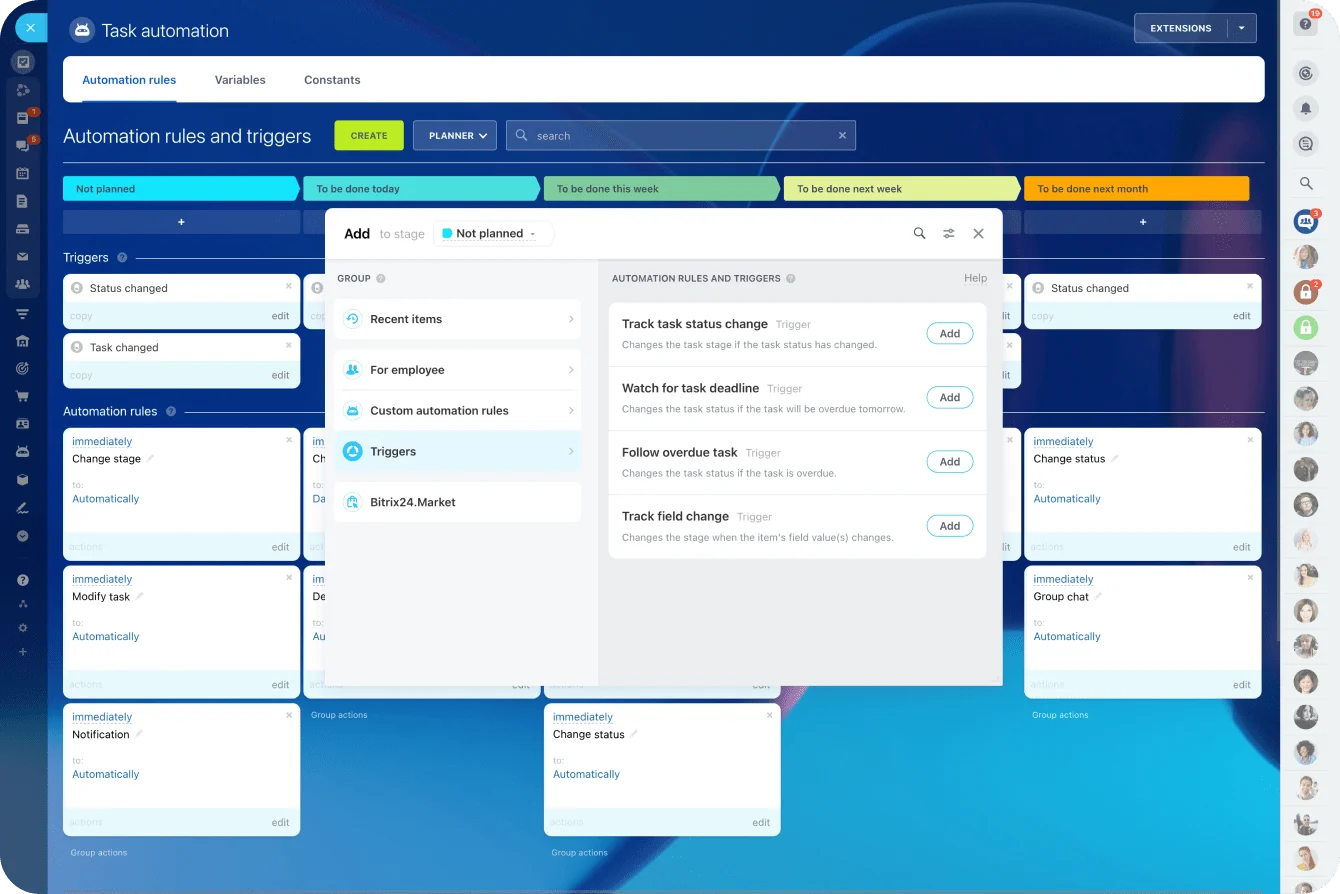
Forgotten chats and late responses erode trust. Buyers accustomed to instant social interactions won't wait 48 hours for a rep to circle back. Automation loops prevent these lapses by assigning tasks, triggering reminders, and enforcing response-time rules automatically.
Set routing logic so incoming messages reach the right team member based on product interest, language, or territory. Configure queues to ensure no conversation sits untouched. Define SLA rules - every inquiry gets an initial response within one hour, every quote request within four hours - and let the system escalate overdue items.
This structure allows your team to scale volume while maintaining pace. As more social interactions flow into the funnel, automation absorbs the administrative load. Reps focus on selling; the system handles logistics. Campaign follow-up becomes reliable instead of being dependent on individual memory.
Step 8: Connect Products, Quotes, and Payment Links to the Conversation
Friction between "interested" and "converted" kills deals. If a buyer says "Send me pricing," and your rep has to exit the chat, open a quoting tool, build a proposal, export a PDF, and send it via email, minutes tick by - and interest fades.
Keep transactions inside the conversation. Insert catalog items directly in chat. Generate quick quotes with product options, pricing tiers, and delivery details visible in a single message. Attach payment buttons from Stripe, PayPal, or local methods, so the buyer can complete checkout without leaving the thread.
Immediate transaction options lift close rates because they match buyer intent in real time. No waiting for an email that might land in spam. No friction when navigating to a separate checkout page. Order tracking updates can flow back through the same channel, reinforcing trust and opening the door to repeat customer strategies inside the messaging experience.
Step 9: Measure the Full Social-to-CRM Loop
Attribution visibility separates high-performing teams from those guessing at what works. Track every step: which channel sourced the lead, which content type triggered the conversation, which CTA they responded to, and what conversation stage they entered.
Measure conversion time: how long does it take from the first social interaction to a closed deal? Track deal velocity across entry points. Compare revenue per Reel, per Story, per comment-driven inquiry. This data reveals which content formats and CTA structures deserve more investment.
Analytics turn results into concrete decisions. If Reels generate high views but low conversions, tweak the micro-CTA or adjust the follow-up sequence. If DM inquiries from Lives close faster, prioritize live content. Your social CRM funnel improves continuously when measurement informs production. Retargeting audiences can be built from engagement data, and customer re-engagement campaigns can reference specific past interactions stored in the CRM.
Social CRM Funnel Kit: Reel to Repeat Buyer in 24 Hours
Enter your email address to get a comprehensive, step-by-step guide

Driving Social-to-Sale Results with Bitrix24
A high-converting social CRM funnel depends on three things: speed, structure, and continuity between platforms. Capture social interactions instantly. Qualify leads through conversation. Route prospects into defined pipeline stages. Automate follow-ups. Enable transactions inside the chat. Measure every step.
Bitrix24 unifies social channels, CRM, marketing automation, tasks, product catalog, quotes and payments inside one platform. This removes the gaps between social engagement and revenue, because there is no handoff between separate tools. Every DM, comment and inquiry flows into the same omnichannel conversation hub, where contacts are created automatically, sequences are triggered, and the pipeline is updated in real time.
With automated routing, chat templates, CRM pipelines, a central product catalog and analytics dashboards, Bitrix24 lets teams run the entire social-to-sale journey in a single workspace. Mobile CRM access means reps respond from anywhere, while automation workflows ensure nothing falls through the cracks. Recurring revenue becomes more predictable because every buyer interaction feeds into a consistent process.
Once the system is live, each new Reel, post or DM becomes part of a repeatable revenue engine, a social CRM funnel that turns viewers into customers and customers into repeat buyers.
Manage clients and sales with Bitrix24!
Manage leads, automate workflows, and close deals faster with an all-in-one Bitrix24 CRM. Free forever, unlimited users.
START NOW FREEFAQs
How do we capture buyers without leaving the social platform?
Capturing buyers without leaving the social platform requires embedding micro-CTAs directly in your content - keyword triggers in captions, tap-action stickers in Stories, and quick-reply buttons in DMs. When prospects respond, route their messages into an omnichannel inbox that auto-creates CRM contacts. They stay in their native environment while your system captures every detail behind the scenes.
Which automations help create repeat orders fast?
Automations that drive repeat orders fast include post-purchase sequences, reorder reminders based on product lifecycle, and personalized upsell messages triggered by past buying behavior. Pair these with loyalty offers sent at strategic intervals. When your CRM tracks purchase history and automates timely nudges, customers return without your team chasing them manually.
How does mobile CRM support instant fulfillment?
Mobile CRM supports instant fulfillment by giving reps real-time access to inventory, pricing, and order creation from any device. When a buyer confirms interest via DM, your team can check stock, generate a quote, and push the order into fulfillment, all from a phone. No delays waiting to reach a desktop; deals close wherever the conversation happens.
What KPIs show real-time revenue lift?
KPIs that show real-time revenue lift include conversion rate by channel, average deal velocity, revenue per content format, and response-time-to-close correlation. Track how quickly social inquiries become paying customers and compare performance across Reels, Stories, and DMs. These metrics reveal which entry points generate actual pipeline value versus vanity engagement.
How do we prevent spam while automating follow-ups?
Preventing spam while automating follow-ups depends on respecting opt-in signals and setting frequency caps. Trigger sequences only after genuine engagement - a DM initiated by the buyer, a direct reply to your CTA, or an explicit request. Limit message cadence, personalize content based on prior interactions, and always provide a clear opt-out path to maintain trust.