The Feedback Cadence: Who to Ask, When, and Why

You open your dashboard. Traffic’s steady, campaigns are running, but conversions refuse to budge. So you tweak a headline, swap an image, change the CTA. The numbers move — then stall again. You’re not optimizing anymore; you’re guessing.
This is where most teams get stuck: reacting to performance dips instead of understanding them. Every decision is based on hunches, not hard signals.
But when you build a feedback cadence — a rhythm of listening, testing, and refining — you stop guessing what customers want and start knowing. You learn why users hesitate, what convinces them to act, and how small changes compound into real growth.
This article breaks down exactly how to do it:
- Who to ask for the most valuable feedback (and whose opinions to ignore)
- When to ask, so responses reveal truth instead of noise
- Why timing, segmentation, and follow-up determine whether feedback drives growth or just fills dashboards
By the end, you’ll have a practical system for turning everyday feedback into predictable, measurable progress — powered by Bitrix24’s built-in analytics, automation, and testing tools.
Bitrix24’s integrated feedback system lets you collect real-time insights, automate follow-ups, and experiment with confidence.
Join millions who’ve replaced guesswork with data-driven decisions.
Get Started TodayWhat is a feedback cadence?
Most teams already collect feedback—a post-checkout survey here, a chat pop-up there, maybe a form with an optional comment box. These methods capture snapshots, not patterns. They're reactive, triggered by events like campaign launches or conversion drops.
A feedback cadence works differently. It's proactive. You establish a consistent tempo of collecting insights throughout your entire funnel, tracking problems before they metastasize.
This structured approach lets you spot trends early (where messaging consistently confuses users), align with agile testing (iterating quickly on pages and copy), and measure impact over time (whether experiments actually improve conversion).
Unlike standalone survey tools or analytics dashboards, Bitrix24 unifies insights, testing, and automation — making feedback not just heard, but operationalized.
Bitrix24's Analytics and Reporting,Landing Pages, and CoPilot in Sites and Stores make building this cadence straightforward. Track user behavior, test variations, and automate follow-ups in one centralized platform. You shift from reacting to the market to deliberately steering your growth.
Who to ask: Identifying the right voices
Not all feedback is created equal. Some comments illuminate; others just add noise. Knowing whose voice matters is what counts.
1. Your frontline observers
Marketing, sales, and customer support teams see friction before anyone else.
Marketing tracks where users abandon landing pages or ignore specific messages. Sales conversations expose the gap between your marketing promises and buyer expectations. Real objections surface during demos and calls, showing you exactly where messaging falls short. Support tickets reveal where users get stuck post-conversion, offering clues about UX or feature clarity.
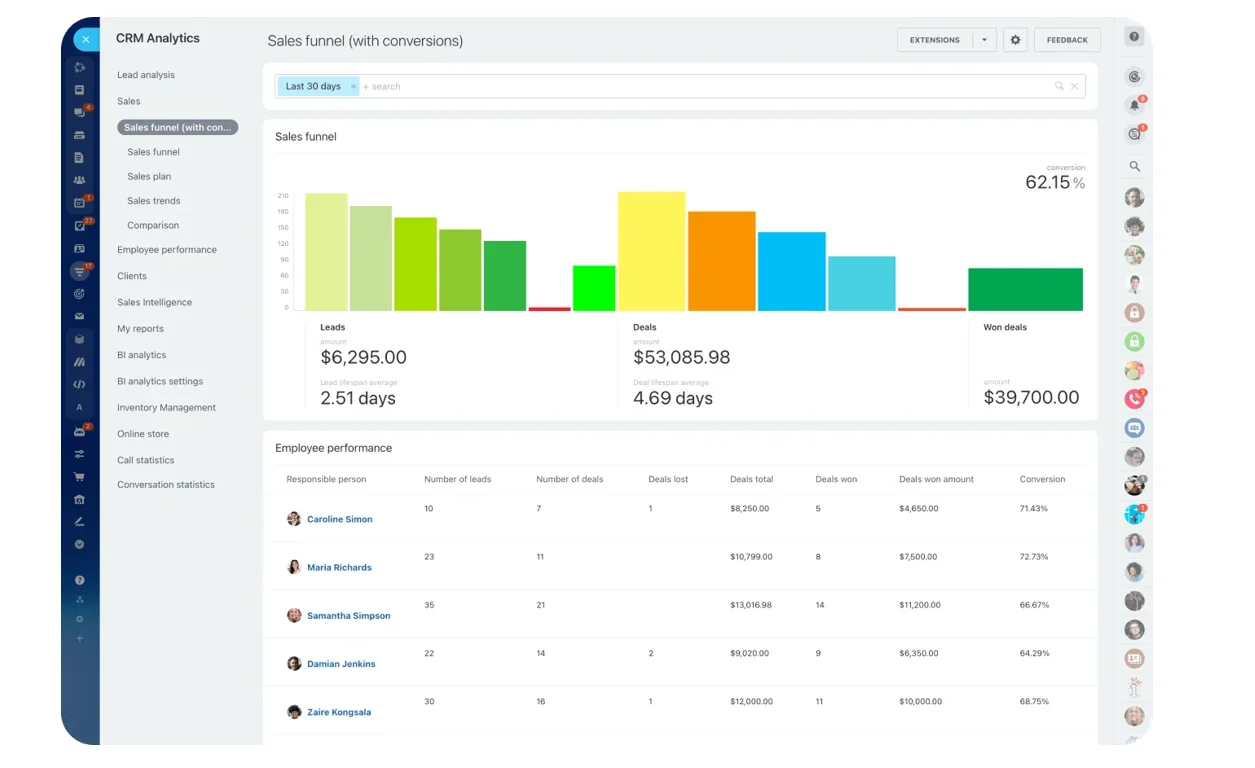
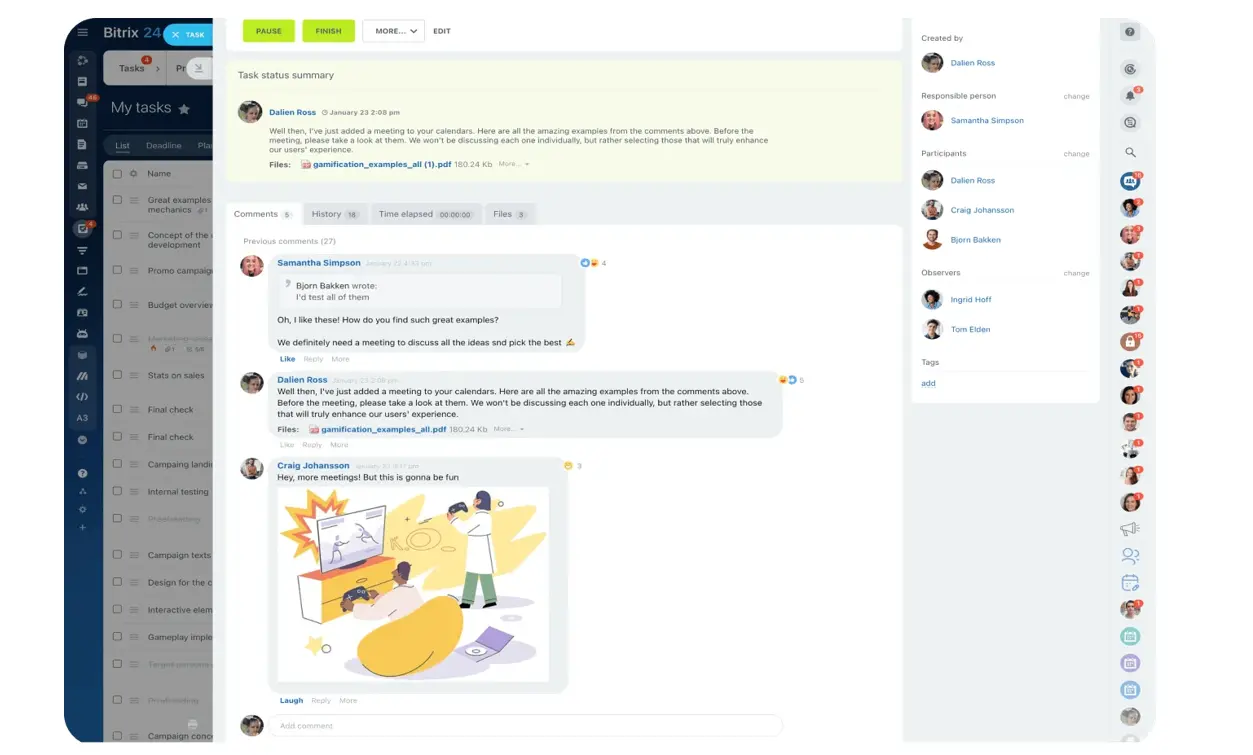
Regular internal feedback helps your team adjust campaigns before issues reach customers. With Bitrix24, these insights flow through shared workspaces and reporting dashboards without getting lost in email threads or siloed conversations.
2. Your real-time users
Customers and prospects are your most honest critics. They tell you where your funnel delights or frustrates them.
Prioritize who to ask based on their journey stage.
- New visitors need clarity. Ask yourself: can they understand your offer in five seconds?
- Once leads sign up or start a trial, friction becomes the enemy. Was the form easy, or did something create resistance?
- Recent buyers reveal conversion psychology in action: what pushed them over the edge? What almost stopped them?
- Churned users and abandoned carts hold the answers you need most. What was missing? What felt unclear? These insights explain the losses that hurt your bottom line.
Combining these voices uncovers patterns that reveal the real drivers of conversion.
3. Segment and Prioritize for Signal
Collecting feedback from everyone sounds thorough. It's actually paralyzing.
Group responses by journey stage: awareness, consideration, conversion. Filter for actionable feedback, the kind that directly connects to decisions or actions. Bitrix24's CRM and analytics tools segment respondents by campaign, traffic source, or customer type, so you're curating meaningful insight that shapes growth decisions, not just collecting opinions.
Feedback Cadence Planner: Who To Ask When And Why With Email Scripts
Enter your email address to get a comprehensive, step-by-step guide

When to ask: timing feedback for maximum impact
Even valuable feedback loses potency at the wrong time. Ask too early, and users lack enough experience to give meaningful input. Ask too late, and you've lost their attention or trust.
Link your feedback timing to specific funnel moments where motivation, confusion, or satisfaction peak.
1. Top of funnel: landing page & ad feedback
You're testing attention and clarity. People are seeing your message for the first time.
Two questions matter: "Did you immediately understand what we offer?" and "What made you click through (or not?)"
Bitrix24 Landing Pages track visitor behavior with built-in analytics.
See where people scroll, where they drop off, and what CTAs perform best. CoPilot in Sites and Stores then suggests A/B tests or copy improvements based on real-time performance.
2. Middle of funnel: form & nurture stage feedback
Your audience is engaged but still evaluating. Interest is there, but friction can push them away.
Form length matters now. Is anything confusing or unnecessary? Does nurture content feel relevant, or does that follow-up email read like generic marketing spam?
Trigger short, specific feedback prompts right after an interaction. Bitrix24 automation schedules these to appear only after a user completes or abandons a step, capturing feedback while context is fresh and genuine.
3. Bottom of funnel: checkout & conversion feedback
Users at this point have made (or nearly made) a buying decision. This is where their motivations and hesitations are most visible. The goal isn’t to interrupt them mid-transaction, but to capture insight while the experience is still fresh.
Post-purchase micro-prompts or short follow-ups work best here. A one-line question on the confirmation page or in a receipt email—something like “What made you decide to buy today?” or “Was anything unclear during checkout?”—can reveal what truly drives conversions and where friction still hides.
If you prefer a lighter touch, Bitrix24’s Analytics and Reporting can surface similar insight automatically by linking behavioral data (such as time on checkout, payment method, or form abandonment) with outcomes. You’ll see which UX elements, payment options, or offers consistently move the needle without adding friction to the buying experience.
These moments show the “why” behind your conversion metrics—turning each completed sale into data you can act on for the next one.
4. Post-conversion & retention feedback
Don't stop at the sale. Post-purchase or post-onboarding feedback shows how expectations match reality.
"Did you get the value you expected?" and "What would make you recommend us?" are worth asking a few days or weeks after key milestones. Over time, these insights help you predict churn, improve loyalty, and create stronger reactivation campaigns.
Aligning feedback timing with intent turns every touchpoint into a learning moment, helping you capture the "why" behind the numbers.
Why it matters: feedback as attribution fuel
Analytics tells you what happened. Feedback tells you why.
Numbers might show that users leave your landing page after five seconds. Feedback explains that your headline feels unclear or your offer seems "too good to be true." Connecting these dimensions moves you from surface-level metrics to root causes.
Connecting the dots
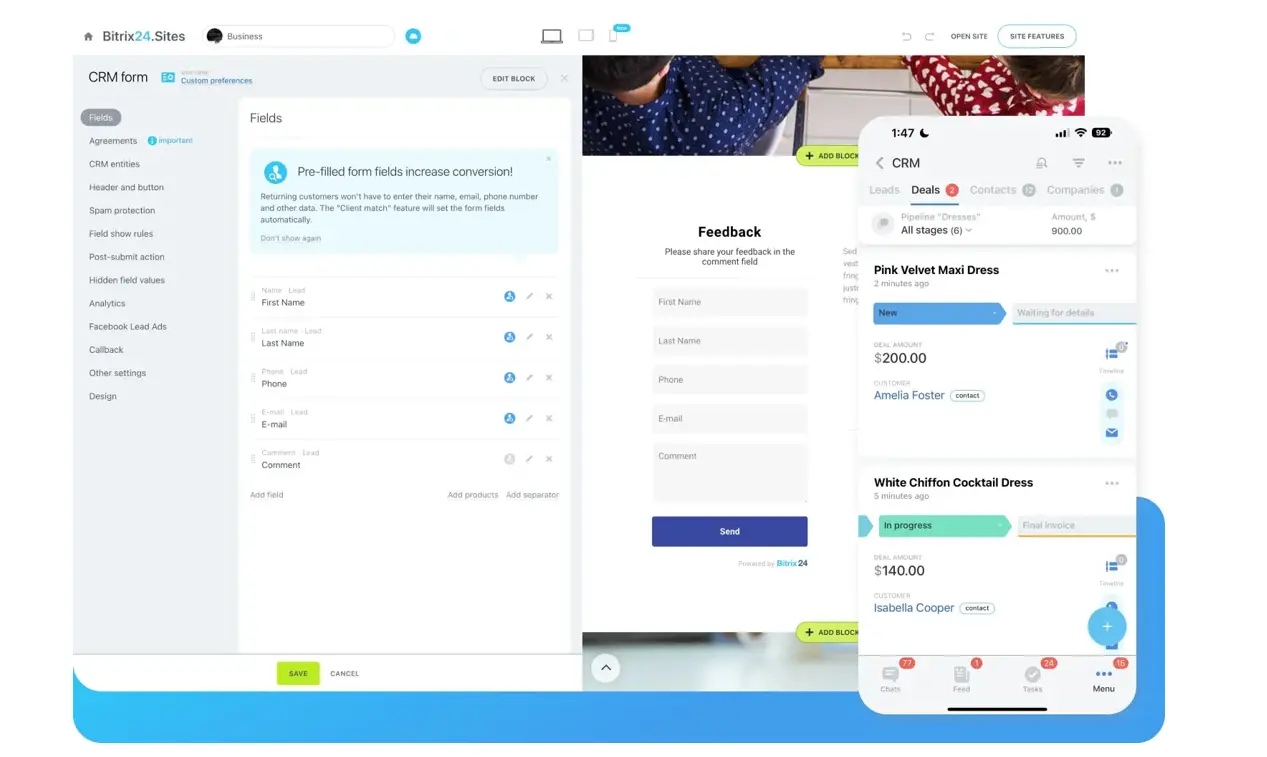
Bitrix24's Analytics and Reporting makes this connection simple. Integrate form responses, survey data, or on-page feedback directly into performance dashboards. Every click, exit, or purchase tells a fuller story, not just what users did, but what they felt while doing it.
Breaking down silos
Modern growth teams struggle with attribution because data lives in silos. Marketing owns ad metrics, sales owns lead data, and product owns usage stats. Feedback bridges these gaps.
- Marketing learns which messages resonate—and which confuse.
- Sales sees why leads qualify or hesitate.
- Product spots the features that drive retention or cause frustration.
Managing all of this inside Bitrix24 unifies the view. Campaign data, CRM records, and feedback live in one ecosystem, so everyone understands which touchpoints actually influence revenue.
From explanation to action
Attribution data only matters if it leads to change. Once you uncover the why, you can act on it—adjust ad creative, simplify checkout steps, or reshape content around real objections and motivations. You move from guessing what might work to running growth experiments grounded in evidence.
The takeaway:
Analytics tells the story of performance. Feedback reveals the story of people. Combine them, and every number becomes a signal you can act on.
From insight to action: running rapid experiments
Collecting feedback is only half the story. Growth happens when you turn insights into experiments: small, focused changes you can measure and refine quickly.
Don’t wait for perfect data
Don't wait for perfect data. Once you spot a pattern in feedback, test it.
Users say your landing page feels unclear? Test a new headline. Long checkout forms generate complaints? Remove one field and measure what happens. When leads mention pricing confusion, add a short FAQ or tooltip.
Progress you can track beats perfection you can't achieve every day of the week.
Launch and learn fast
With Bitrix24 Landing Pages, you can create A/B tests in minutes. Built-in analytics track clicks, conversions, and engagement in real time so you can see what’s working (and, just as importantly, what isn’t) without waiting for lengthy reports.
Focus on high-impact ideas
Not all ideas deserve equal attention. Let your analytics guide which changes to test first. High-impact, low-effort tweaks (like a clearer CTA) come first. Data-backed hypotheses from feedback get priority over assumptions.
Bitrix24's Analytics and Reporting filters by campaign, traffic source, or customer segment, showing you where the biggest improvements will matter most.
Keep momentum
Speed matters. When acting on feedback drags out for weeks, learning stalls. Use Bitrix24 automations to keep tests flowing—triggering follow-ups, reminders, or content updates automatically so insights turn into action fast.

Close the loop
After every experiment, measure impact and share results. Compare feedback before and after the change. What improved? What didn’t? This reflection sharpens your next test and aligns your team on what’s driving real growth.
The feedback rhythm
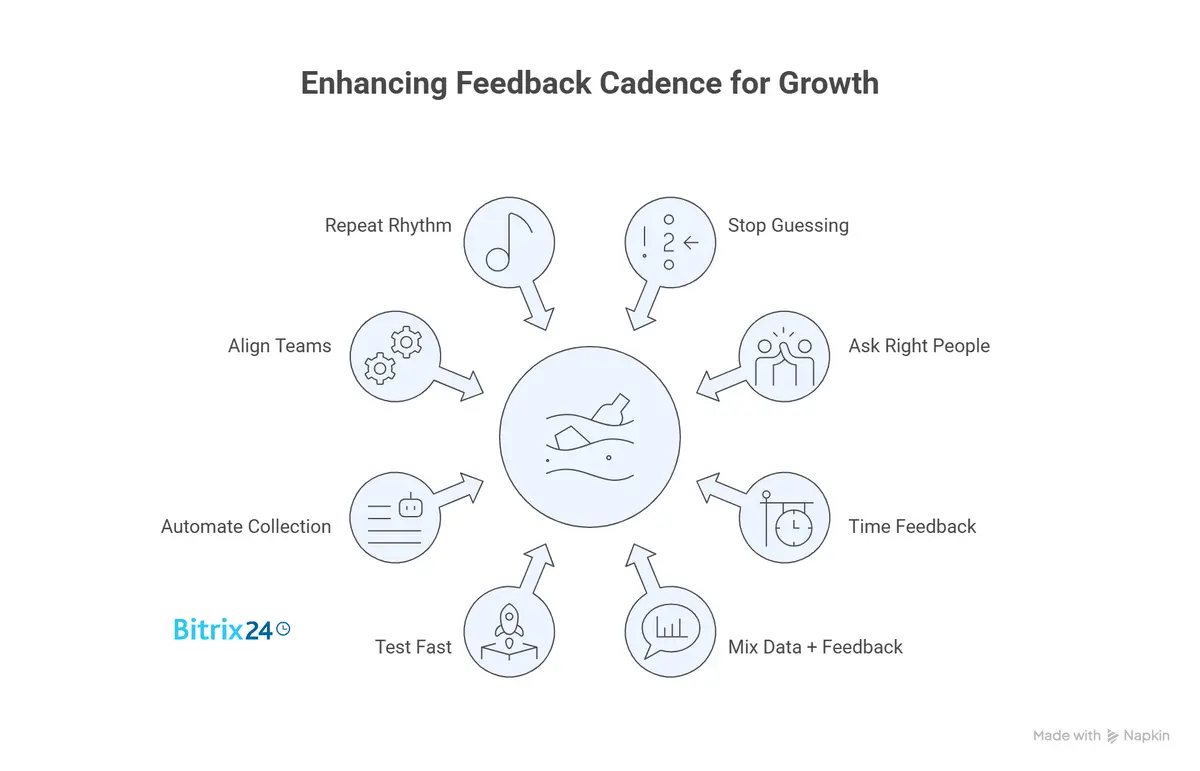
Listen → Interpret → Test → Measure → Repeat.
This rhythm turns feedback from a reaction into a repeatable process.
Feedback and handoff: bridging marketing and sales
Feedback isn’t random; it’s connected. Turning that connection into measurable growth means creating a structured handoff between teams.
Identifying key touchpoints across the funnel
Map your customer journey from first click to post-purchase engagement:
- Top of funnel: landing pages and ads
- Middle: email sequences, demos, nurturing content
- Bottom: checkout and onboarding
- After conversion: retention and referral
At each stage, ask: What kind of feedback would help us improve performance here?
Bitrix24 Landing Pages and Analytics visualize this funnel, showing where users engage most and where they drop off. Your team sees exactly where feedback will have the greatest impact.
Automate feedback collection
Manual feedback gathering doesn't scale. Automation keeps your cadence consistent without burdening your team.
Within Bitrix24 Sites and Stores, you can automate short, contextual surveys after users complete or abandon a key action, and capture responses at predefined milestones—like post-purchase or after sign-up. These insights flow straight into your dashboard, so patterns are spotted early and acted on fast.
Centralize and analyze insights
Once feedback starts flowing, organize it in one place.
Bitrix24's CRM logs every customer comment and interaction. Analytics and Reporting tracks trends across campaigns and channels. Shared dashboards give marketing, sales, and support real-time insight access.
Everyone working from the same feedback source means alignment happens naturally. Teams discuss findings, prioritize changes, and measure results faster.
Review and refined regularly
Feedback cadence evolves with your goals. Schedule periodic reviews to assess what's working.
Weekly: Check analytics for emerging trends. Monthly: Review key funnel metrics and common feedback themes. Quarterly: Evaluate overall impact—what improved, what didn't, and where to experiment next.
Inside Bitrix24, these cycles are simple to maintain. Automated reporting and collaborative workspaces make it easy to revisit and refine your strategy without starting over.
The Bottom Line: Stop Guessing, Start Growing
Sustainable growth isn’t built on guesses or one-off surveys. It’s built on momentum — the steady loop of listening, acting, and learning.
When feedback becomes part of your workflow, every touchpoint turns into insight. You stop chasing opinions and start compounding understanding: what motivates visitors, what slows them down, and what drives them to act.
With Bitrix24, the path from signal to improvement is seamless.
- Landing Pages let you test and capture insights in real time.
- Analytics and Reporting show exactly how those changes perform.
Join over 15 million teams worldwide who trust Bitrix24 to turn feedback into growth and see what it can do for yours.
FAQ’s
1. How often should I collect feedback?
Consistency matters more than frequency. Start with one structured feedback touchpoint per funnel stage — for example, post-visit, post-signup, and post-purchase. Once your system’s running smoothly, adjust cadence based on traffic volume and testing cycles.
2. What’s the difference between feedback and analytics?
Analytics shows what users did. Feedback tells you why they did it. Together, they reveal both the behavior and the motivation behind your metrics — the key to smarter growth decisions.
3. How can I keep feedback from becoming noise?
Segment responses by journey stage and intent. Focus on insights tied to measurable actions, not just opinions. Bitrix24’s CRM and Analytics help filter feedback by campaign, source, or customer type so only actionable data drives change.
4. What’s the best way to start building a feedback cadence?
Begin small. Choose one high-impact page or process, add a single feedback prompt, and review the responses in Bitrix24 Analytics. When you see clear trends, run one quick experiment. Then repeat. The compounding effect is where the growth happens.