From Ideas to Impact: 8 Ways to Auto-Prioritize Backlogs That Actually Ship

Most teams drown in backlogs that never get smaller. Features pile up faster than developers can ship them. Every stakeholder lobbies for their pet project. The loudest voice wins, or worse, the CEO's offhand comment becomes the next sprint's emergency.
Product planning gets lost entirely, buried under a Kanban board that merely organizes the chaos.
Traditional backlog prioritization relies on gut feeling, political capital, and whatever seemed urgent during last Friday's panic meeting. Teams debate endlessly about what matters most, but they're guessing. They lack objective criteria, ignore behavioral data, and make decisions based on whoever argued most convincingly in Slack.
All of this leads to backlogs bloated with hundreds of tasks nobody trusts, roadmaps that shift weekly, and engineers building features nobody uses because they scored high in a stakeholder workshop six months ago.
Smart teams are abandoning this model entirely. They're building systems that automatically re-rank work based on real signals - customer behavior, usage data, technical constraints, business impact, and delivery readiness. These systems don't replace judgment; they augment it with evidence. They surface what actually matters, deprioritize noise, and keep the backlog aligned with current reality.
The eight methods below transform backlog prioritization from a quarterly slog into a continuous, data-driven process. Teams adopting these approaches ship faster, reduce meeting overhead, and avoid the Sunday-night dread of another week arguing about priorities.
Stop Arguing, Start Shipping: Prioritize on Auto-Pilot
Replace gut-feeling debates with a data-driven system. Automatically rank your backlog using real signals like customer impact and delivery readiness to focus your team on what truly matters.
Automate Your Prioritization1. Use Real Customer Signals Instead of Opinions
Here's the uncomfortable truth: most product backlogs reflect internal politics more than customer needs. Sales wants their biggest prospect's feature. Marketing wants visual improvements. Engineering wants to refactor the codebase. Everyone has theories about what users want, but few teams actually check.
Agile prioritization starts by listening to what customers do, not what they say. Usage analytics reveal which features people adopt and which collect dust. Churn analysis uncovers the frustrations that drive cancellations. Support ticket clustering identifies friction points that affect hundreds of users daily. NPS verbatims contain specific pain points that quantitative data misses.
Modern platforms consolidate these signals into weighted scoring systems. High-volume support issues automatically rank higher than low-frequency requests. Features with declining usage trigger priority reviews. Customer segments approaching renewal get their feedback escalated.
This doesn't eliminate judgment; it informs it. Product managers still decide, but they're responding to evidence of actual customer behavior. The difference between a team that prioritizes based on usage data versus a team that prioritizes based on who yelled loudest in the last meeting? The first one ships features people actually use.
Automated pipelines pull data from analytics platforms, CRM systems, support queues, and customer feedback tools. They normalize signals across different sources, apply weighting rules, and update priority scores continuously. When a new customer segment starts experiencing friction, relevant backlog items rise automatically.
2. Rank Work by Business Impact, Not Task Size
Most backlogs organize around effort: small tasks here, significant initiatives there, tech debt in its own graveyard pile. This creates a perverse incentive to cherry-pick easy wins that deliver minimal value.
Impact scoring flips this model. Every task gets evaluated against measurable business outcomes: revenue generation, retention improvement, risk reduction, compliance requirements, and customer satisfaction gains. A three-day feature that prevents churn gets prioritized over a three-hour enhancement that makes the UI slightly prettier.
Automated scoring eliminates the "cool idea" problem - engineers love building clever solutions, but cleverness isn't a business metric. When every backlog item must justify itself against concrete impact categories, low-value work stops clogging the pipeline.
Revenue impact connects to sales data and customer segmentation. Retention impact links to churn analysis and engagement metrics. Risk reduction ties to technical debt scoring and security audits. Compliance impact tracks regulatory deadlines and audit findings.
The scoring model evolves as business priorities shift. During high-growth phases, revenue-generating features score higher. When retention becomes critical, churn-prevention work increases. Teams don't manually rescore hundreds of tasks; the system recalculates based on current strategic weights.
This transforms product backlog management from endless reprioritization meetings into strategic weight adjustments. Leadership sets impact criteria quarterly. The automation handles the tactical ranking daily.
3. Auto-Tag and Cluster Tasks Using AI
A typical backlog contains dozens of duplicates, near-duplicates, and related tasks scattered across different epics. Someone creates "improve mobile checkout flow" while another epic already contains "fix cart abandonment on mobile" and a third lists "mobile payment UX issues."
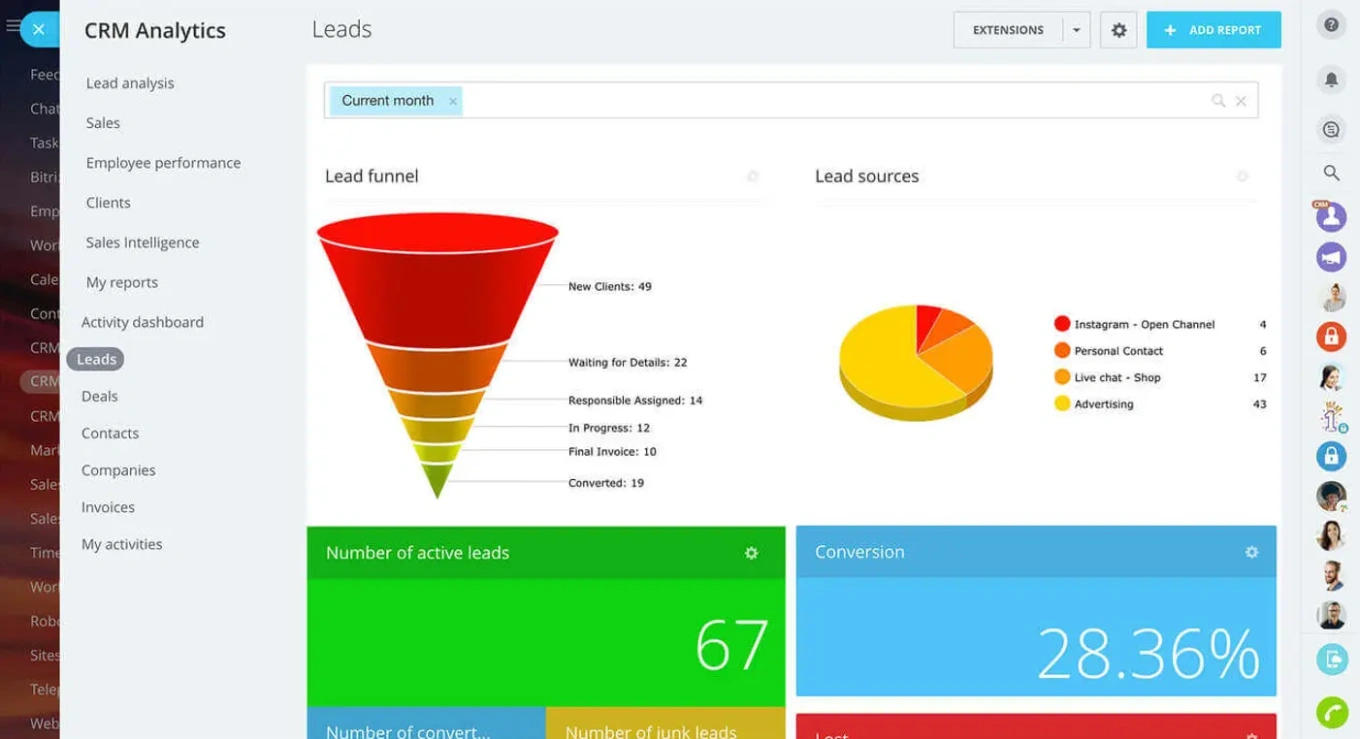
Human grooming catches some redundancy, but it's tedious work that product managers avoid until the backlog becomes incomprehensible. Bitrix24 CoPilot and similar systems analyze task descriptions, comments, and linked issues to identify themes automatically.
AI clustering groups related work across categories: performance optimization, onboarding improvements, billing system enhancements, and mobile experience fixes. It surfaces hidden dependencies - when three different teams request database query optimization, the AI flags this as a high-impact infrastructure project affecting multiple initiatives.
Tagging automation applies consistent labels that humans forget. Security issues get flagged. Technical debt gets categorized by severity. Customer-facing features get tagged by persona. This consistency makes filtering and sorting reliable, which makes the prioritization framework application actually work.
The clustering also reveals patterns invisible in linear backlogs. When five separate feature requests all trace back to slow API response times, the root cause comes into focus. Teams can tackle the underlying issue once rather than building workarounds across multiple features.
Automated tagging doesn't just organize. It informs task ranking by exposing relationships. A medium-priority feature might jump in rank when AI identifies it as blocking three high-priority initiatives downstream.
Master AI through these 10 prompts
Enter your email to download a comprehensive list of the most essential AI prompts.
4. Align Priorities With Velocity and Capacity in Real Time
Aspirational backlogs are useless. Teams stack hundreds of high-priority items, then wonder why they miss deadlines and burn out engineers.
Effective backlog prioritization accounts for what teams can actually deliver. Sprint velocity data shows realistic throughput. Team composition highlights skill constraints. High-priority backend work has no realistic path to delivery if every backend engineer is already committed through Q2.
Sprint automation systems check capacity before promoting items. When the backlog algorithm identifies a high-impact feature, it verifies whether the team has bandwidth and the necessary skills. If not, the item waits in a ready queue instead of creating false urgency.
This prevents the classic sprint planning disaster: leadership declares five initiatives as top priority, but the team only has capacity for two. Without automated capacity checking, product managers overpromise, engineers get frustrated, and nothing ships on time.
Real-time alignment also adjusts for reality. Team members go on vacation. Engineers get pulled into production incidents. Skills availability changes as projects wrap. The prioritization system continuously recalculates what fits within available capacity, automatically moving overflow items to future sprints.
The outcome is an honest roadmap. Stakeholders see what is actually achievable given current constraints, not fantasy schedules built on heroic assumptions. Teams commit less and deliver more, which builds trust and reduces the constant negotiation about why everything takes longer than planned.
5. Integrate Technical Debt Into the Same Priority Model
Technical debt lives in separate lists that product managers check quarterly and deprioritize weekly. Meanwhile, aging code accumulates risk, slows feature development, and eventually causes production incidents that blow up roadmaps.
Treating tech debt separately from feature work creates false choices. Prioritization should focus on which items deliver the highest value when opportunity and risk are evaluated together.
Automated debt scoring evaluates code quality metrics, security vulnerabilities, performance bottlenecks, and architectural constraints. It identifies hotspots where technical issues actively slow development. These scores feed into the same prioritization framework as feature work.
A high-severity performance issue affecting checkout doesn't compete with features - it gets prioritized based on business impact (revenue at risk) and cost of delay (customers abandoning purchases daily). The system treats it like any other backlog item: measure impact, assess urgency, schedule appropriately.
Product analytics reveal when technical limitations block feature development. If engineers estimate three weeks for a feature that should take three days because the underlying codebase is brittle, that brittle code becomes a measurable drag on product efficiency. The automation surfaces these blockers and elevates them when they're throttling broader initiatives.
Integrating debt into standard backlog prioritization also breaks the boom-bust cycle where teams ignore maintenance until emergencies force multi-week cleanup sprints. Continuous debt scoring surfaces problems early, allowing incremental fixes before they metastasize.

6. Apply Cost-of-Delay Scoring Automatically
Not all high-impact work is equally urgent. A feature that prevents churn during renewal season matters more than the same feature six months later. A compliance requirement due in 30 days trumps a higher-revenue feature launching next quarter.
Cost-of-delay scoring quantifies urgency by measuring what you lose by waiting. Revenue opportunities decline if you miss market windows. Customer satisfaction erodes when known issues persist. Competitive threats intensify as rivals ship faster.
Manual cost-of-delay calculations require constant updates as conditions change. Automated systems recalculate continuously based on current data: customer contract renewal dates, regulatory deadlines, competitive intelligence, seasonal patterns, and technical dependencies.
The algorithm considers time sensitivity (does this get less valuable over time?), customer exposure (how many users hit this issue daily?), financial impact (what's the revenue opportunity or cost?), and dependency chains (what else is blocked waiting for this?).
This keeps roadmap management aligned with reality. When a major customer flags an issue two months before renewal, that work automatically rises in priority. When a dependency clears, blocked tasks get reevaluated for immediate scheduling. When market conditions shift, strategic priorities adjust accordingly.
Teams stop arguing about what's urgent because the data answers that question. Cost-of-delay scoring provides objective evidence about timing, which reduces political maneuvering and focuses energy on shipping valuable work when it matters most.
7. Use Workflow Automations to Update Priority Stages Automatically
Traditional backlogs are snapshots that decay immediately. Customer priorities shift. Dependencies resolve. Risks escalate. But the backlog stays frozen until someone manually grooms it, which happens sporadically at best.
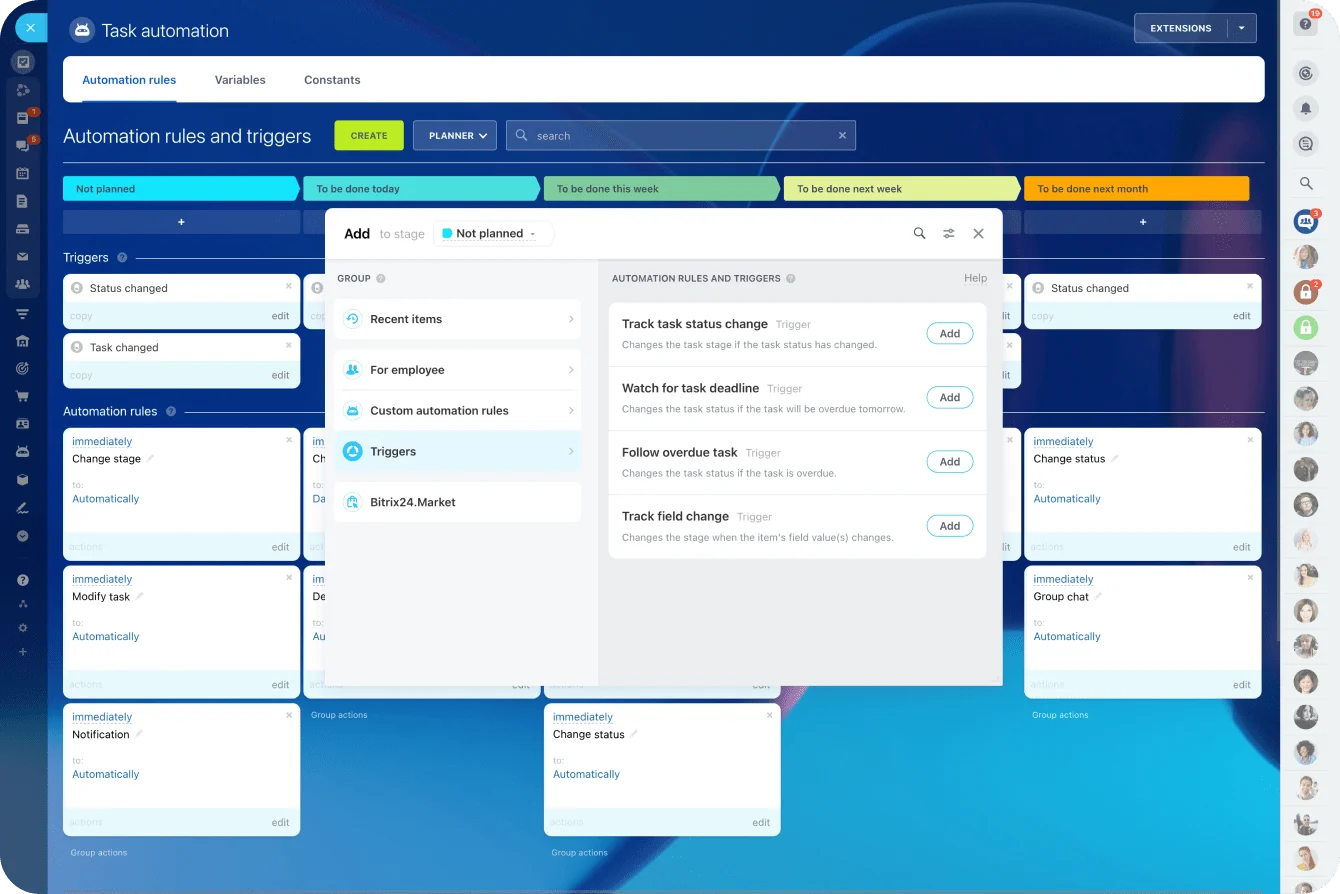
Backlog automation keeps priorities current by triggering updates based on real-world events. When a high-value customer segment shows engagement decline, related retention features automatically move up priority bands. When a technical dependency gets resolved, blocked tasks become actionable. When a risk metric crosses a threshold, mitigation work escalates.
These workflow triggers eliminate the lag between reality changing and the backlog reflecting those changes. Product managers don't spend hours updating task statuses. The system monitors signals and adjusts automatically.
Integration with business intelligence, customer data platforms, and operational systems enables sophisticated triggers. Customer health scores dropping trigger priority adjustments for features targeting that segment. Production metrics exceeding error budgets elevate reliability work. Sales pipeline data influences feature prioritization based on deal probability and size.
This continuous updating means the backlog always reflects current conditions, not last month's meeting. Teams can trust their sprint planning because priorities aren't stale. Agile execution accelerates when the backlog accurately represents what matters right now.
The automation also provides audit trails. When priorities shift, the system logs why - which signal changed, which threshold got crossed, and what data triggered the update. This transparency builds confidence in automated decisions and helps teams refine their prioritization logic over time.
8. Connect Priorities to Delivery Readiness
High-priority work that lacks acceptance criteria, designs, technical specifications, or stakeholder alignment creates thrash. Teams pull tasks into sprints, then discover they can't proceed because requirements are unclear or dependencies aren't ready.
Backlog prioritization must account for readiness, not just importance. Automated systems check whether high-priority items meet the definition-of-ready criteria before promoting them. Missing designs? The task waits in a preparation queue. Unclear acceptance criteria? It doesn't enter sprint consideration. Unapproved technical approach? It stays in the discovery phase.
This eliminates the common pattern in which product managers prioritize work that isn't ready to ship, forcing engineers to either wait idle or start building on shaky foundations. Readiness checks ensure that when a task reaches the top of the backlog, everything needed to ship it exists.
Efficiency metrics improve dramatically when readiness gates prevent unready work from entering active development. Teams maintain flow because they're not constantly blocked waiting for clarification. Cycle times decrease because work moves smoothly from commitment to completion.
The automation also surfaces bottlenecks in preparation processes. When high-priority items pile up waiting for design reviews, that signals a constraint in design capacity. When technical specs consistently lag behind business requirements, that indicates insufficient architecture planning resources.
Connecting priority to readiness creates a pull system where work enters active development only when it's truly ready to ship. This reduces waste, increases velocity, and makes sprint planning sessions calmer because teams commit only to work they can actually complete.
Auto-Prioritization Toolkit: 8 Ways to Ship
Enter your email address to get a comprehensive, step-by-step guide

Elevating Delivery Through Intelligent Backlog Management
Modern backlog prioritization doesn't happen in conference rooms. It happens continuously, driven by systems that synthesize customer signals, business metrics, team capacity, technical constraints, and delivery readiness into objective rankings.
Teams that automate prioritization ship more predictably because their backlogs reflect reality, not wishful thinking. They reduce meeting overhead by allowing algorithms to handle tactical re-ranking while humans focus on strategic decisions. They experience less stress because they're not constantly firefighting misprioritized work that should never have entered the sprint.
The shift requires investing in data infrastructure, defining clear impact criteria, and trusting systems over instinct. But teams that make this transition report faster shipping rhythms, higher-quality decisions, and engineers who can focus on building rather than defending their time against the chaos of priorities.
Automated backlog prioritization isn't about removing human judgment; it's about augmenting it with evidence. Product managers still set strategic direction, make tradeoffs, and decide what not to build. But they're responding to data about what customers need, what the business requires, and what teams can realistically deliver.
Teams that prioritize automatically don't "save Fridays" for grooming sessions. They ship consistently from Monday through Thursday because their backlogs stay current, their priorities reflect truth, and their commitments match capacity.
Bitrix24 provides robust tools for implementing automated backlog prioritization across your product development workflow. Its project analytics capabilities track velocity and capacity in real time, giving teams honest visibility into delivery constraints. Built-in automation triggers update task priorities based on custom business rules, customer signals, and dependency changes. The platform's AI-powered features help cluster related work, identify duplicates, and surface patterns humans miss during manual grooming.
Integration with CRM data enables priority adjustments based on customer behavior and account health. Custom fields and scoring frameworks let teams define impact criteria that matter for their specific business model. Workflow automations connect priority bands to readiness gates, ensuring only well-defined work enters active development.
Ready to move from backlog chaos to predictable shipping? Explore Bitrix24's project management features and discover how automated prioritization transforms product delivery from guesswork into systematic execution.
Simplify project management with Bitrix24!
Organize tasks, track work progress, and collaborate effortlessly – all in one platform. Free forever, unlimited users.
GET BITRIX24 FOR FREEFAQs
How do we accurately quantify impact vs. effort for backlog prioritization?
To accurately quantify impact vs. effort for backlog prioritization, connect each task to measurable business outcomes such as revenue affected, customers impacted, or risk reduced. Use historical data from similar work to estimate effort more reliably. Automated scoring creates impact-to-effort ratios that highlight high-value, low-effort opportunities while filtering out resource-intensive tasks with minimal returns.
What signals actually predict shorter cycle times and faster shipping?
Signals that predict faster cycle times include clear acceptance criteria, final designs, no active dependencies, validated scope, and confirmed team availability. Items with complete readiness metadata move through the system without friction. Anything missing specs, designs, or approvals reliably slows teams down and consistently extends cycle times.
How does AI turn meeting notes into structured backlog tasks?
AI ingests meeting notes from documents, chats, or call summaries and scans them for action items, feature requests, constraints, and decisions. It detects phrases that imply work to be done, then extracts owners, requirements, acceptance criteria, and dependencies from the surrounding context. Finally, it generates fully structured backlog tasks with titles, descriptions, tags, and priority metadata so that ideas captured in meeting notes become actionable work instead of getting buried in long documents or conversation threads.
How can we detect scope creep early in the backlog and sprints?
Detect scope creep by monitoring description changes, added subtasks, increasing story points, and new requirements appearing after sprint commitment. Automated alerts highlight when tasks deviate from their original scope. Regular comparisons between the initial acceptance criteria and the evolving work show early signs of expansion and misalignment.
How do we avoid bias toward "flashy" ideas?
Avoid bias toward flashy ideas by requiring objective, evidence-based scoring before an item enters the backlog. Use automated evaluation of customer demand, revenue potential, retention risk, or operational impact. Prioritization rooted in real-world signals - not presentation energy - prevents “shiny” ideas from consuming development cycles without delivering value.