Sell Inside the Chat: A 10-Step DM Sales Playbook to Turn DMs into Deals
Your customers aren't leaving Instagram to browse your website. They're not opening a new tab to compare prices on Amazon. They're staying right where they are, inside the chat. The modern buyer discovers, evaluates, and purchases without ever exiting their favorite messaging app. For businesses still forcing prospects through clunky multi-step funnels, this shift represents a problem. For those embracing DM sales, it's a goldmine.
Why do DM-first funnels outperform traditional web forms and landing pages? Three reasons: zero friction, instant response, and native trust. When someone messages your brand on WhatsApp or Instagram, they're already in a comfortable environment. They trust the platform. They expect quick replies. Remove the barriers - the redirects, the loading screens, the account creation prompts - and you eliminate the moments where buyers hesitate, reconsider, or simply forget. This approach to social selling meets customers exactly where their attention already lives.
Here's the challenge, though. Running DM-based sales operations at scale isn't as simple as answering messages quickly. You need to issue offers, collect customer data, push orders into your CRM, trigger automations, and handle payments - and if you rely on copied links and manual data entry, the conversation quickly turns into a chaotic mess. Lose the flow, and you lose the sale.
This guide walks through ten actionable steps to master DM sales and convert direct messages into repeatable, scalable revenue. Use them as a checklist or a full playbook - either way, your team gets a clear structure to close deals faster while customers enjoy a seamless buyer experience from first message to final purchase.
Step 1: Capture Interest Instantly with Website Widgets Embedded in Your Social Profiles
The journey toward effective DM sales starts before anyone sends that first message. Your social profiles - WhatsApp Business, Instagram, Facebook, TikTok- need Website widgets that route inquiries directly into your CRM rather than scattered inboxes.
Think about what happens without this setup. A prospect clicks your Instagram bio link, lands on a generic contact page, fills out a form, and waits. Maybe someone will check that inbox tomorrow. Perhaps the lead falls through the cracks entirely. Now compare that to a widget-enabled profile: the prospect taps a button, lands inside a chat interface, and their message appears instantly in your omnichannel CRM alongside every other customer conversation.
This single change eliminates the gap between "interested" and "engaged." Your team sees new inquiries the moment they arrive, complete with context about where that prospect came from. Source tracking becomes automatic - you'll know whether that hot lead discovered you through a TikTok video or an Instagram story, shaping how your rep approaches the conversation from the first reply.
Struggling with lost DM leads on Instagram or WhatsApp?
Eliminate manual entry, trigger instant quotes, and sync payments in real time for scalable revenue.
Try Bitrix24 for freeStep 2: Use Website Forms Inside the Conversation to Qualify Without Breaking the Chat
Once a conversation begins, you need information - budget, timeline, specific requirements. Traditionally, this meant asking question after question in a back-and-forth that exhausted both parties. A smarter tactic is to send micro-forms as DM links.
These aren't clunky external surveys. They're lightweight forms (name, email, budget range, project timeframe) that open within the messaging interface or require just one tap to complete. On submission, the data auto-populates in your CRM. No manual entry, no copy-paste errors, no friction that kills the DM funnel momentum.
The conversation keeps flowing; a hallmark of effective DM sales. The prospect answered your qualifying questions in seconds. Your CRM now holds enriched contact data ready for personalized follow-up. Everyone wins. Plus, these forms can adapt based on previous answers, showing different fields for different customer segments, so your team no longer has to manage multiple qualification scripts manually.
Step 3: Build DM-Friendly Product Cards and Instant Quote Templates
Speed matters in DM sales conversations. When a prospect asks about pricing, waiting twenty minutes while you manually build a quote kills the buying energy. Preformatted product cards and quote templates solve this.
Create templates that include price, available options, delivery timelines, and relevant upsells, all formatted for easy reading inside a chat window. When the moment arrives, your rep selects the appropriate template, personalizes it with two or three details, and sends it. The prospect sees a professional, scannable offer with one-click reply options: "Yes, let's proceed," "I have questions," or "Send me the premium option instead."
Handled this way, instant selling keeps the conversation moving forward instead of stalling. The prospect doesn't need to download PDFs or decode spreadsheets. Everything they need to make a decision fits inside the same chat thread where the relationship started. Your templates can also include expiration dates or limited-time pricing, creating urgency that encourages faster decisions without requiring pushy follow-ups from your sales team.
Step 4: Trigger CRM Deals Automatically When a Conversation Becomes an Opportunity
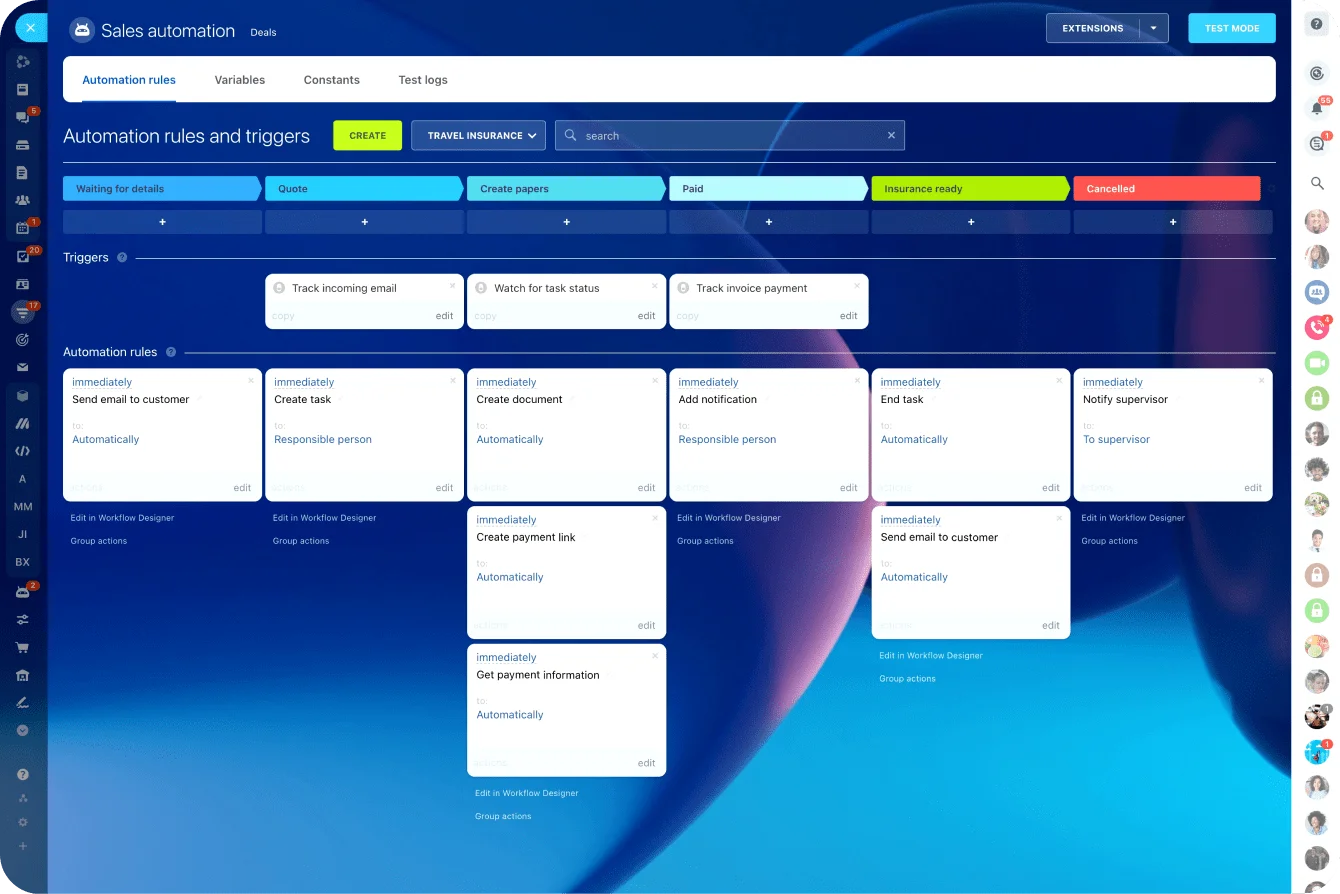
At some point, a casual inquiry becomes a real opportunity. Recognizing that shift - and acting on it - shouldn't require manual work. Successful DM-driven sales operations rely on proper CRM automation to handle this transition automatically.
Set triggers based on specific actions: a prospect requests a quote, confirms budget, or expresses purchase intent. When those conditions appear, your CRM automatically creates a deal record, assigns it to the appropriate pipeline stage, and notifies the responsible team member. No more copying conversation snippets into separate tools. No more deals slipping through because someone forgot to log them.
Converting a DM into a trackable deal takes seconds, and your sales pipeline reflects reality in real time. Managers gain instant visibility into which conversations are progressing toward revenue, making forecasting more accurate. Meanwhile, reps spend their energy selling rather than updating spreadsheets or toggling between apps to log activities.
Step 5: Use Automation to Run Stock Checks and Availability in Real Time
- "Do you have this in blue?"
- "Is the large size available?"
- "Can you ship by Friday?"
These questions demand immediate answers. If your rep has to leave the chat, open an inventory system, search for the product, and return with information, you've introduced delay - and doubt. Integrating inventory checks directly into your DM sales workflow eliminates that friction.
When a buyer asks about availability, the system queries your stock database and returns the answer within the conversation. Your rep confirms availability instantly, or offers alternatives if the item is out of stock. This prevents the embarrassing scenario of promising something you can't deliver and builds trust through responsiveness. For businesses with multiple warehouses or suppliers, the system can even identify which location offers the fastest shipping option based on the customer's address.
Step 6: Generate Payment Links Directly Inside the Chat
Here's where many businesses fumble the handoff. The prospect is ready to buy. They've seen the quote, confirmed the details, and expressed clear intent. Then you send them to a separate checkout page, and suddenly they're distracted, reconsidering, or simply closing the browser tab.
Conversational checkout keeps the transaction inside the conversation. Generate payment links - supporting card payments, PayPal, PIX, SEPA, or regional methods - and send them directly in the DM. These in-app payments let the customer tap, pay, and confirm in a few seconds, staying in the same chat thread from start to finish.
This approach dramatically reduces abandonment and transforms your DM-to-sales conversion rate. The buying decision and the payment action happen in the same mental moment, inside the same interface. Security concerns fade when customers recognize trusted payment processors, and the entire transaction completes before second thoughts have time to surface.
DM Sales Playbook: 10 Steps to Close in Chat
Enter your email address to get a comprehensive, step-by-step guide

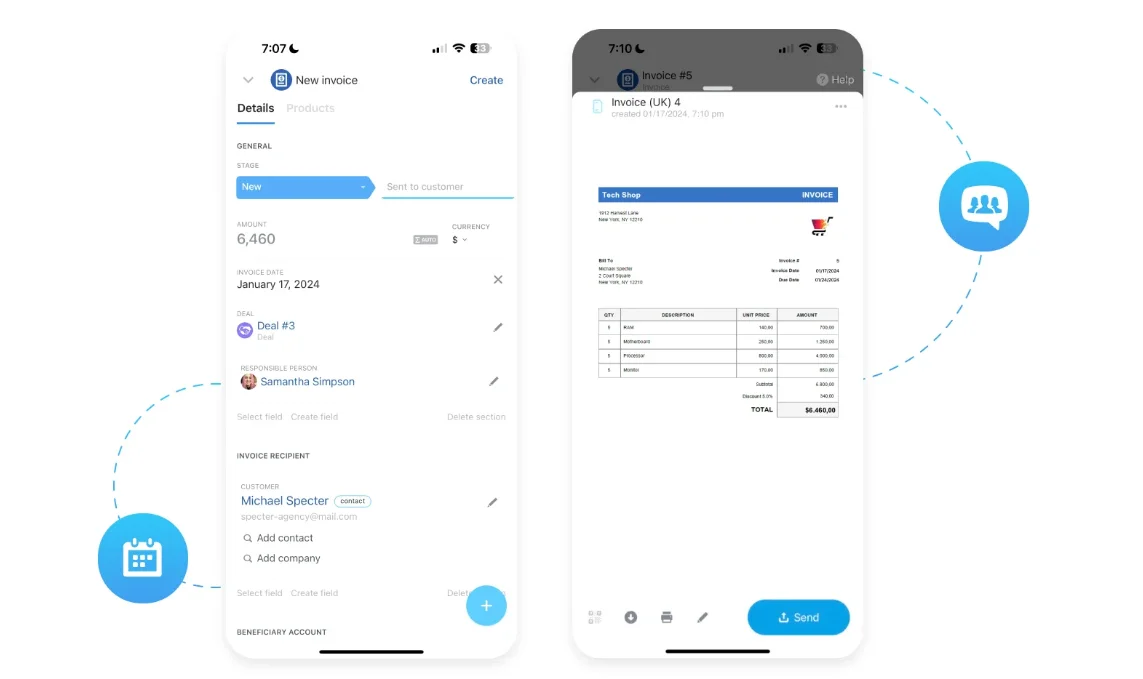
Step 7: Sync Orders and Invoices into CRM Without Leaving the DM Thread
Payment received. Now what? In a fragmented system, someone manually creates an order record in one tool, generates an invoice in another, and updates delivery status somewhere else. By the time everything syncs, hours have passed.
A unified conversational CRM handles this automatically. The moment payment clears, the system creates the order record, issues the invoice, updates the deal stage, and logs everything in the customer's contact history. Delivery status syncs as fulfillment progresses.
Your team never leaves the DM thread to manage backend operations. This seamless way of running DM sales keeps everything traceable, centralized, and connected to the conversation where the sale happened.
Beyond operational efficiency, this integration transforms customer service interactions. When a buyer messages weeks later asking about a past purchase, your rep instantly sees the original conversation, invoice details, and fulfillment history, all within the same thread. No searching through disconnected systems or asking the customer to repeat information. This complete visibility also benefits team collaboration: if a different rep handles the follow-up inquiry, they walk into the conversation fully informed and ready to help.
Step 8: Automate Follow-Ups Based on Buyer Behavior
Not every prospect converts immediately. Some need time. Others need reminders. Building follow-up automation based on actual behavior instead of arbitrary timelines increases recovery rates without annoying your audience.
Consider these scenarios:
- A prospect opened your quote but didn't respond within 24 hours. Trigger a gentle check-in asking if they have questions.
- Someone viewed the payment link but didn't complete the transaction. Send a nudge with a direct line to support in case something went wrong.
- A customer completed a purchase. Initiate an onboarding sequence that helps them get value from what they bought.
Each trigger responds to real actions, making your DM sales follow-ups feel timely rather than robotic. The system learns from patterns, too, and if certain message sequences consistently recover abandoned carts, you can refine and scale those approaches across your entire team so you never need to draft individual reminders from scratch.
Step 9: Keep Humans in the Loop Where It Matters
Automation accelerates the chat-to-order process, but certain moments demand human judgment. Objections, custom requests, complex negotiations, high-value deals - these situations benefit from a real person stepping in.
Design your in-chat funnel with clear escalation points. When a conversation hits specific criteria (deal value above a threshold, customer expressing hesitation, request outside standard offerings), route it to a human rep with full conversation context. That rep picks up seamlessly, addresses the situation personally, and either closes the deal or resolves the concern.
The goal isn't eliminating people from DM-based sales. It's reserving human attention for the moments where it creates the most value while automation handles routine tasks. Customers often sense when they're talking to a real person versus a bot, and for high-stakes decisions, that human presence can be the factor that closes the deal or saves a relationship headed toward churn.
Is your CRM ready? Check the guide
Enter your email to download a guide that will help you get started with any CRM system.
Step 10: Deliver Shipping Updates, Service Reminders, and Post-Purchase Care Inside the Same DM Channel
The sale doesn't end when the customer pays. Tracking links, delivery notifications, usage tips, review requests, renewal reminders - all of this can happen inside the same DM thread where the relationship began.
This unified experience strengthens loyalty. The customer doesn't need to check email for shipping updates, visit a portal for invoices, or remember a separate support channel for questions. Everything lives in one place: the chat where they first discovered your brand.
Chat-based sales extend naturally into post-purchase care, and this continuity is what makes DM sales so powerful - turning one-time buyers into repeat customers through consistent, convenient communication. When it is time for renewal or a complementary product launches, reaching out feels like continuing a conversation rather than starting cold outreach. That familiarity drives lifetime value far beyond what traditional email sequences achieve.
Bitrix24: Streamlining Every Stage of the Chat-to-Sale Process
DM sales represent more than a channel shift - they unlock a faster, more natural buying journey. Interest, qualification, offer, payment, delivery, and ongoing support all happen in a single conversation thread. No redirects. No fragmented tools. No lost context.
Running this at scale requires a platform that connects CRM, automation, communication channels, Website widgets, Website forms, payments, and order management under one roof. Without this level of integration, teams still jump between apps, manually copy information, and lose track of conversations that should convert. Customers feel that friction immediately.
Bitrix24 removes those gaps. Its omnichannel contact center unifies WhatsApp, Instagram, Facebook, live chat, and email into a single CRM timeline, so every DM becomes part of a structured sales workflow. Reps can create deals, send quotes, trigger automations, and generate payment links directly from the same conversation, and payments sync instantly with invoices, orders, and the product catalog. Automations carry the operational load - updating deal stages, sending follow-up reminders, launching onboarding sequences, or notifying human reps when a conversation needs personal attention. Everything from the first message to the final delivery status is recorded automatically, giving teams full visibility weeks or months later.
Instead of stitching together chat apps, spreadsheets, payment pages, and order tools, Bitrix24 turns the entire DM funnel into one continuous workflow. Your team focuses on selling; the platform handles the mechanics.
Start your DM-first sales engine today. Try Bitrix24 for free and see how seamless chat-to-sale journeys can be.
Sell smarter with Bitrix24 CRM!
Close more deals with sales automation, real-time tracking, and AI-powered insights – all available inside Bitrix24 CRM.
START NOW FREEFAQs
How do we sell directly without losing conversational tone?
Selling directly in DMs while keeping a conversational tone comes down to preparation. Use preformatted product cards and quote templates that feel like natural recommendations, not sales pitches. Embed micro-forms as simple links rather than interrogating prospects with endless questions. When the system handles data collection and payments seamlessly, your team focuses on genuine dialogue instead of administrative tasks.
What automations help us close deals in under 5 minutes?
Several automations accelerate deal closure significantly. Auto-qualification forms capture essential data instantly. Real-time inventory checks answer availability questions without delays. One-click quote templates eliminate manual pricing work. Payment link generation keeps checkout inside the chat. Automatic deal creation in your CRM removes logging tasks. Combined, these automations compress what used to take hours into a few rapid exchanges.
How do we sync inventory and shipping updates in real time?
Syncing inventory and shipping updates in real time requires integrating your stock management and fulfillment systems directly with your messaging platform. When a customer asks about availability, the system queries the current inventory automatically. Once they purchase, tracking information flows back into the same DM thread. Customers receive shipping notifications, delivery confirmations, and status changes without having to check separate portals or email.
What playbooks boost upsells inside chats?
Effective upsell playbooks inside chats rely on timing and relevance. Configure product cards to display complementary items alongside primary offerings. Set triggers that suggest upgrades when customers select entry-level options. Train your team to recognize buying signals and offer premium alternatives naturally. Post-purchase sequences can introduce accessories or extended services when customers are most engaged with their recent decision.
How do we track revenue attribution from DM conversations?
Tracking revenue attribution from DM conversations requires connecting your messaging channels to your CRM pipeline. Tag each conversation by source – Instagram, WhatsApp, Facebook - and let deal records inherit that data automatically. As payments are processed, revenue is linked back to the originating channel and conversation. Dashboard reports then show exactly which platforms and campaigns generate closed revenue, not just leads.