Unlock the True Value of Trial Experiences - Close More Deals

Most trials fail for a reason that has nothing to do with product quality. Sales teams treat the trial as temporary access, while buyers use it to judge purchase risk: will this work for our process, with our team, without creating a mess?
That’s why a strong product can still lose the deal. If the trial doesn’t create clarity, confidence, and evidence, the buyer has no easy way to defend the purchase internally. The software may perform perfectly, but the deal still stalls. With the median B2B SaaS trial-to-paid conversion rate sitting around 18.5%, most trials end without a sale.
For account executives and account managers, trial design is one of the few close-rate levers they can directly control. This article explains why good trials still fail, what separates the ones that convert, and where the experience tends to fall apart in practice.
What a trial experience actually means in B2B sales
A trial experience is the full evaluation journey a prospect goes through before buying. A login, a sandbox, or a temporary account is only one piece of it.
That journey covers onboarding, setup guidance, stakeholder alignment, support quality, usage direction, and proof that the product creates measurable business value. The real test is whether the buyer can defend a yes internally, which goes well past whether the tool works.
Trial, proof of concept, or evaluation?
Teams blur four terms here that aren't interchangeable:
- Free trial usually means open access with limited structure.
- Product trial can be guided or unguided, depending on the sales motion.
- Proof of concept is narrower and deliberate, built to validate a specific technical or operational claim.
- Evaluation experience is the broadest of the four, because it includes how the buyer is supported and how value gets interpreted.
Feature access alone doesn't create an evaluation. Buyers need context: what to test, what success looks like, who should be involved, and how trial activity connects to the decision.
The distinction matters for teams running mixed motions. A self-serve product may offer a free trial while a larger account gets a structured evaluation or proof of concept. The goal is the same, reduce uncertainty, but the design should match the buying environment rather than the product model.
Who owns the trial experience?
On most deals the AE owns the commercial side, a sales engineer or solutions consultant owns setup and technical proof, and a customer success or onboarding contact handles guidance.
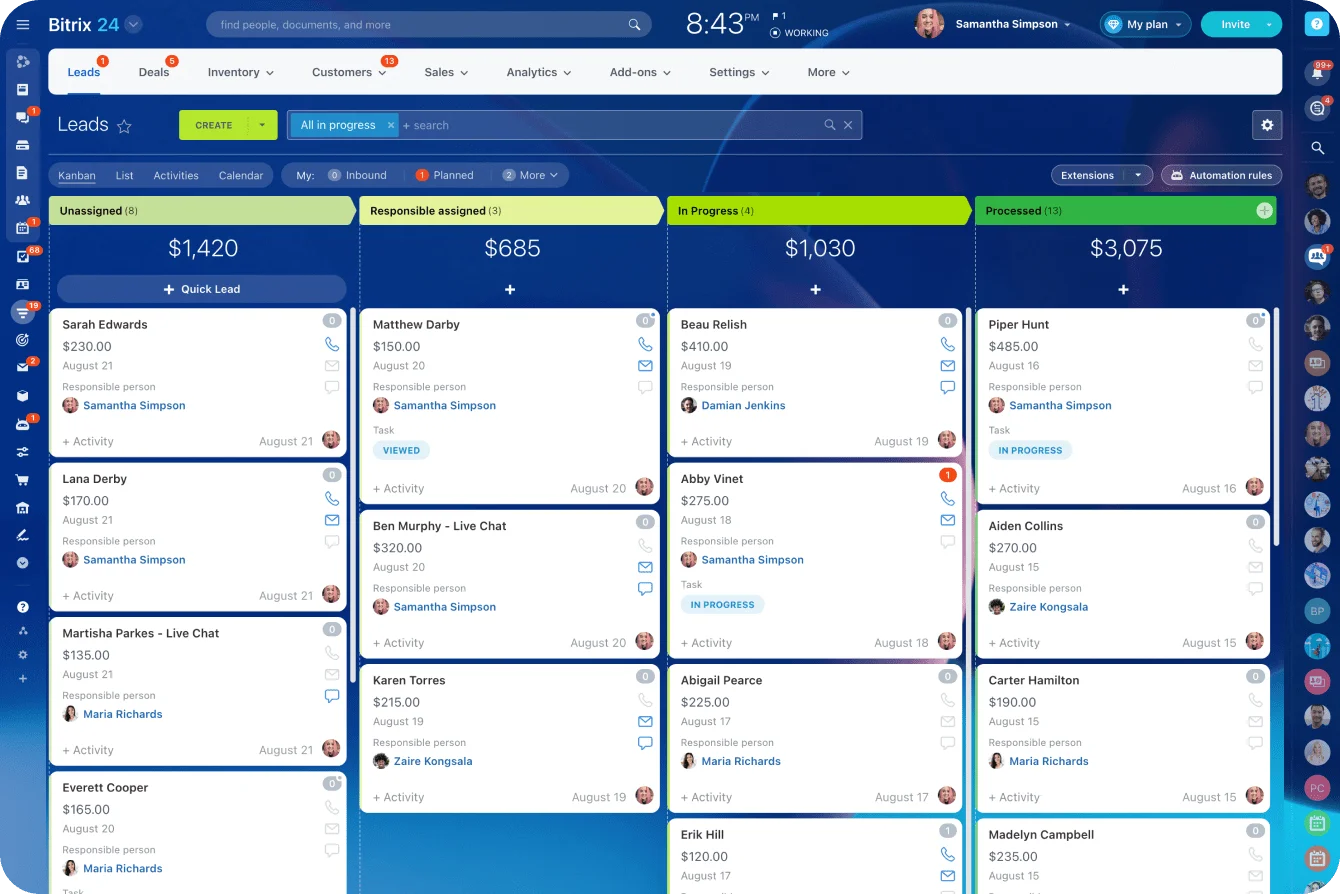
In smaller teams one person wears all three hats, which is exactly where trials drift, because setup, follow-up, and ROI framing compete for the same calendar. Keeping the whole trial inside one CRM record, rather than scattered across inboxes and spreadsheets, is what makes that workload survivable as deal volume grows.
Why trial experience matters for conversion, trust, and revenue outcomes
Risk reduction is the job
A well-run trial reduces perceived risk. That's the core job. Buyers evaluate operational fit, implementation burden, adoption likelihood, and whether approving the purchase will create internal regret. Product capability is only part of what they weigh.
When the experience is handled well, the internal champion gets what they need to advocate: proof that the product solves a real problem, fits the workflow, and justifies the budget. Decision-makers get evidence instead of enthusiasm.
Pro tip: Agree the decision question before the trial starts
Before giving access, ask one simple question: “What would this trial need to prove for you to move forward?” The answer should shape the setup, the users involved, the success criteria, and the final review. Without that, the trial becomes open-ended product exploration instead of a buying evaluation.
Trial quality outlives the first sale
Trial quality affects more than initial conversion. It changes how fast deals move, how confident stakeholders feel, and what they expect after go-live. A chaotic trial often creates a hidden retention problem, because the buyer signs with unresolved questions. A guided trial sets a cleaner path into onboarding.
Trial length feeds into this too. Shorter trials tend to convert better partly because they force a tighter cadence: one analysis puts 7-day trials near 24% conversion against about 14% for 30-day trials.
A long runway without structure usually just gives momentum more time to die.
|
Dimension |
Unmanaged Trial |
Guided Trial |
|---|---|---|
|
Engagement |
Scattered activity, often by the wrong users |
Focused usage tied to target personas and goals |
|
Time-to-value |
Slow start, setup confusion, delayed insight |
Faster activation with clear milestones |
|
ROI visibility |
Prospect must infer value on their own |
Results are framed and connected to business outcomes |
|
Close probability |
Interest may exist, but buying confidence stays low |
Evidence supports approval and the next-step commitment |
That's the commercial value of a strong trial: it turns evaluation into buying confidence rather than mere product familiarity.
7-Day Trial Conversion Toolkit: Emails, Nudges, Success Plan
Enter your email address to get a comprehensive, step-by-step guide

How trial experiences drive closed-won outcomes
Trials contribute to closed-won outcomes when they make value visible before signature. That sounds obvious, yet many teams still run evaluations that demonstrate software activity without demonstrating business relevance.
The mechanism is commercial as much as technical.
Usage creates exposure. Engagement creates understanding. Support removes friction that would otherwise distort the buyer's view. ROI proof gives the champion and decision-maker something solid to approve.
From activation to buying confidence
A simple way to picture the sequence:
- Inputs: the right users, setup quality, agreed goals, and trial design.
- Activation: meaningful early use tied to the prospect's workflow.
- Validation: evidence that the product solves the target problem or improves a measurable process.
- Buying confidence: enough trust and proof for stakeholders to move from interest to approval.
Weak early inputs damage the whole sequence. Vague goals make activation random. Random activation makes validation weak. Weak validation drags the buying conversation back to opinions.
That's why some trials generate plenty of praise but no purchase. People like the product and may even enjoy using it, but the experience never translates into confidence that buying is justified, so the deal stays soft.
As Lincoln Murphy, founder of Sixteen Ventures and co-author of ‘Customer Success’, puts it, "Free Trials have one job and that is to create a customer."
Activity that doesn't move the account from "this looks promising" to "we can defend this internally" hasn't done that job.
Core elements of a high-converting trial experience
Three elements separate trials that convert from trials that drift.
Goal alignment
A useful trial starts with the prospect's actual use case, not a generic product tour.
What problem are they solving? What does success look like? Who needs to believe the result? What decision timeline are they working against?
Without those anchors, the trial becomes a loose experiment.
With them, it becomes a focused evaluation, which shapes what gets configured, which users participate, what data matters, and how results get read.
Structured engagement
Prospects rarely need constant attention, but they do need momentum. Proactive check-ins, useful milestones, relevant enablement content, and clear next steps keep the evaluation moving. Otherwise even interested accounts drift.
Light-touch nudges keep momentum without smothering the prospect. A short message clarifying what to test next often does more for conversion than a long product deck sent at the wrong moment.
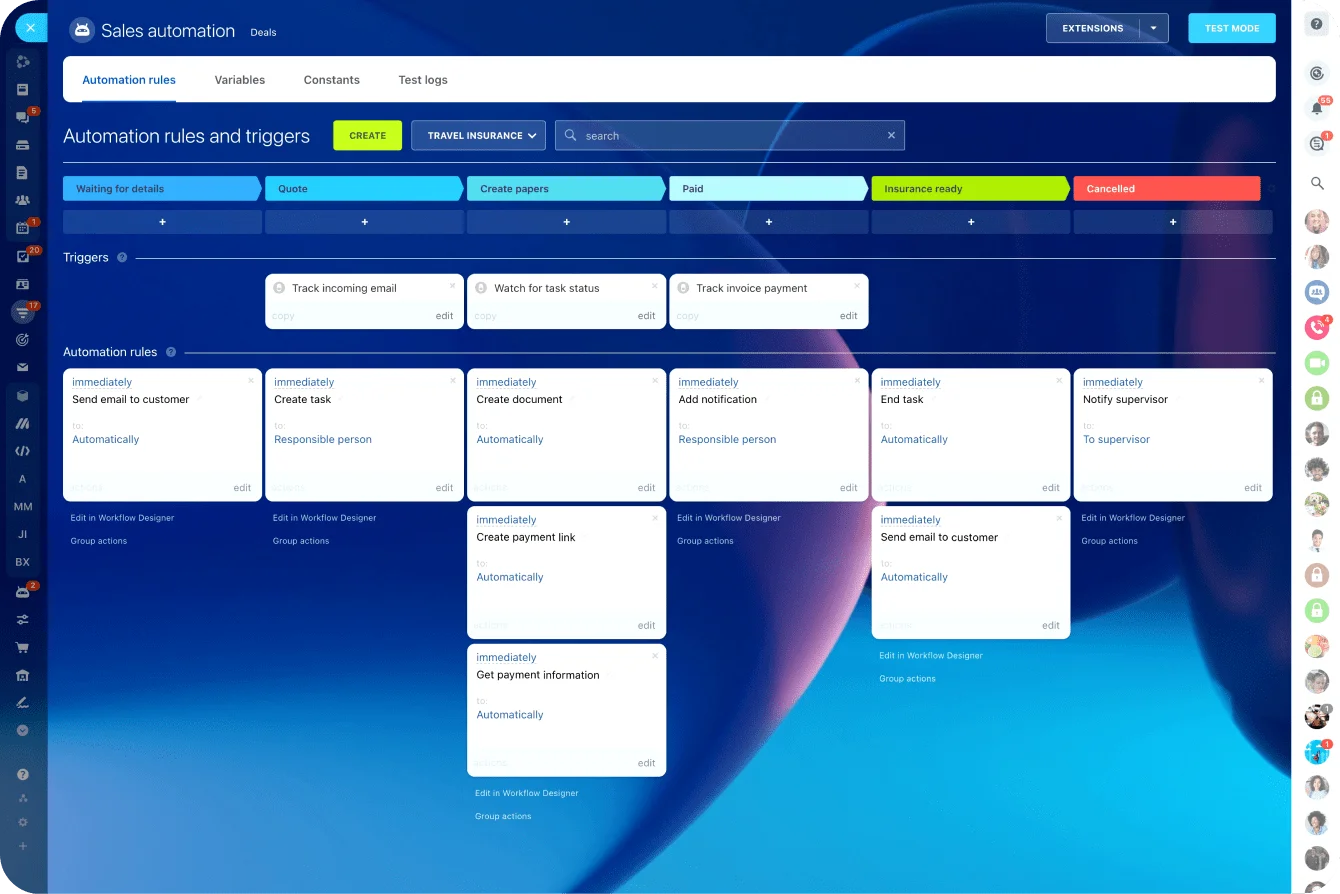
Task automation handles exactly this: schedule check-in reminders, trigger a follow-up when a key action hasn't happened by day three, and route a stalled account back to the AE before the trial clock runs out.
Value demonstration
Many trials stay too passive here. Teams assume the buyer will recognize impact on their own. Sometimes they do; often they don't, especially when multiple stakeholders each see the product through a different lens.
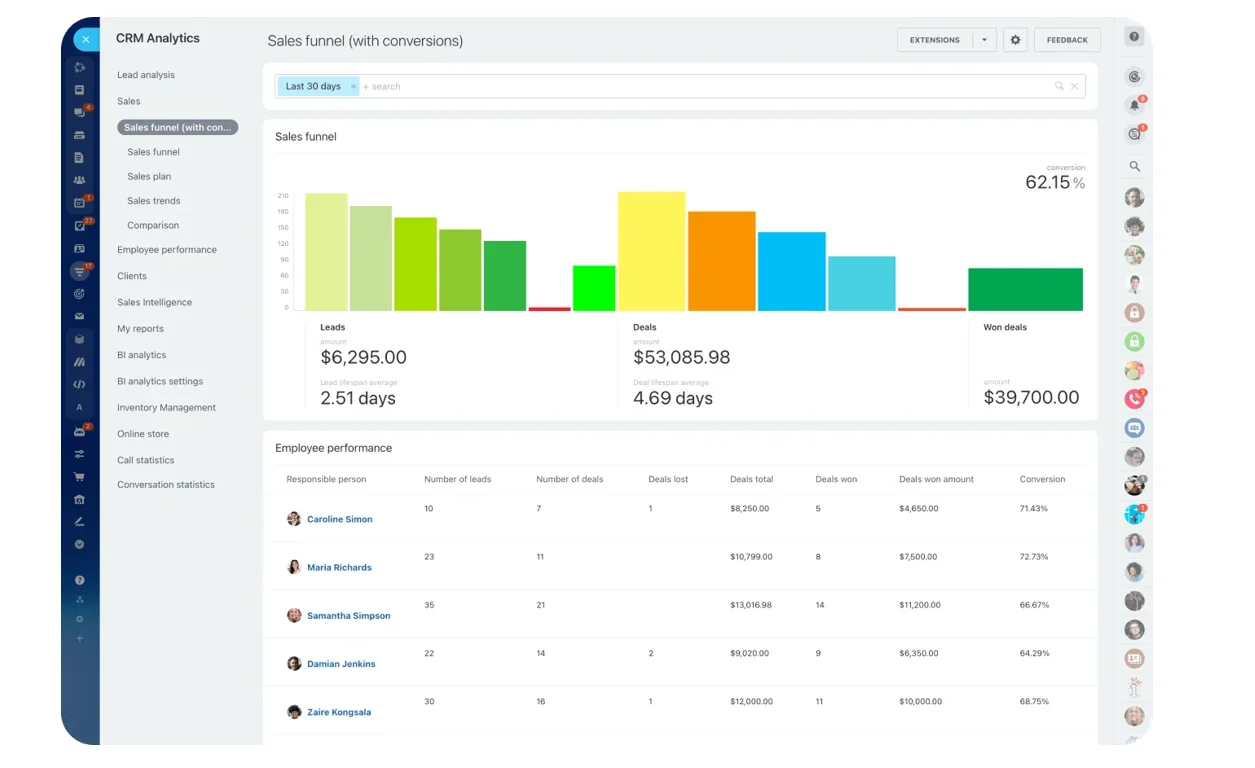
Usage data, outcome reporting, and concrete impact examples make the case explicit. If a trial shortened a workflow, cut manual work, improved response time, or increased visibility, someone should say so in the buyer's own internal terms. Pulling that into a shared dashboard with analytics and reporting beats asking the prospect to assemble the story themselves.
Summary: high-converting trials align to a buyer goal, carry enough structure to keep momentum, and close with evidence that's easy to communicate.
Pro tip: Build a trial recap before the trial ends
Don’t wait for the prospect to interpret the results alone. Near the end of the trial, prepare a short recap that connects usage, milestones, objections, and outcomes back to the original goal. That gives the champion a clearer internal story and helps prevent a positive trial from dying in approval.

Common trial mistakes that lower close rates
Confusing activity with intent
High login counts look encouraging, but they don't always mean readiness. A team of end users may be active while the economic buyer hasn't seen the product once. That's a false signal: the team thinks the deal is warming while the real buying path stays blocked.
Activity matters only when it's tied to the people and criteria that affect approval, which is exactly why weighting accounts by stakeholder engagement rather than raw logins, through tools like AI deal scoring, tends to beat eyeballing dashboards.
Feature overload
In an effort to impress, teams show too much. Prospects get access to a wide surface area and the evaluation loses focus. Instead of proving the few outcomes that matter to the purchase, the trial becomes a broad product tour with no commercial center.
More features don't create more conviction. Often the opposite happens: complexity rises, relevance drops, and the prospect leaves with a fuzzy impression instead of an iron-clad reason to buy.
Weak support and stakeholder orchestration
The product can work fine and the trial still feels inconclusive, because nobody guided the right internal conversations. Technical users saw one thing, business users saw another, and leadership never saw a synthesized picture of value.
ROI framing left to the end, or skipped
When results aren't tied back to time saved, risk reduced, cost avoided, or revenue enabled, the product can perform well and still fail to get funded. This is the most common reason a "successful" trial dies in procurement.
Real-world business use cases: How different sales motions benefit from better trials
Mid-market SaaS
Guided trials help champions prove operational fit quickly. These buyers often need sign-off from finance, IT, or a department lead, but they don't have time for a heavy proof-of-concept process.
Take a workflow automation platform selling into a 300-person company. The operations manager likes the product, but finance wants to know whether it cuts manual work enough to justify the spend. A good trial captures more than the tool running. It records a before-and-after view of effort, speed, or error reduction that the champion can carry into the approval meeting.
Enterprise
Trials here are less about broad usage and more about coordinated evaluation. Multiple stakeholders need different proof. Technical teams want security and integration confidence. Business leaders want measurable process improvement. Procurement wants fewer unknowns. A loose trial struggles because each group is evaluating a different kind of risk.
Defined success criteria and tailored evidence are what move enterprise deals. Not glamorous, admittedly, but it works. The trial becomes a managed validation process rather than a waiting period.
PLG-assisted
Trial behavior sharpens qualification and reveals expansion potential. Usage patterns show which teams adopt fastest, where friction appears, and when an account manager should step in. A product-led company might see strong usage in one department and low adoption elsewhere, which points to where to expand the commercial conversation and which blockers to clear before an upgrade.
Activation is the signal that matters here, more than raw login volume.
The activation rate inside a trial drives 60 to 75% of the variation in trial conversion, which is why a team that watches meaningful first actions outperforms one that watches sign-up counts.
Operational impact, scaling challenges, and trial program limits
Repeatable systems beat heroics
As trial volume grows, success depends less on heroic account management and more on repeatable systems: segmentation rules, standardized success metrics, support coverage models, and clear handoffs between sales, solutions, and customer teams. Without them, trial quality gets inconsistent and conversion rates become hard to explain.
A shared view of every active trial, who's engaged, which milestones are hit, what evidence exists, is what keeps that consistent as headcount climbs.
Match support intensity to deal value
Not every deal should get the same experience. A high-ACV, complex evaluation may justify hands-on support, custom setup, and executive check-ins. A lower-value or more mature buyer may need a lighter structure with automated guidance and intervention only when risk signals appear.
That choice is operational as much as budgetary. If every trial gets white-glove treatment, the program becomes expensive and hard to scale. If every trial is low-touch, complex deals get under-supported and stall for avoidable reasons.
Know what a trial can't fix
Some products are hard to evaluate quickly because value emerges over months, not days. Some buyers need procurement proof, security review, or implementation clarity more than feature exploration. And some trials expose a hard truth: the product is strong, but the implementation burden is higher than the sales team admitted.
That last point earns attention. Trials validate product value and reveal readiness gaps in process, onboarding, documentation, and internal ownership. Teams that pay attention to those signals improve the whole go-to-market system, well beyond the close rate.
Summary: scalable trial programs work when support intensity matches deal value and complexity, and when teams accept that some evaluation barriers are commercial or operational rather than product problems.
Turn trial access into buying confidence
A trial only has commercial value when it helps the buyer make a decision. Product access is part of that, but it isn’t enough on its own. The buyer also needs clear goals, guided usage, stakeholder alignment, and evidence they can take back to the people approving the purchase.
That’s where sales teams can change the outcome. A stronger trial experience gives prospects a reason to move from “this looks useful” to “we can justify buying this.”
Bitrix24 helps teams manage that process in one place, with CRM records, deal activity, tasks, communication, automation, analytics, and reporting connected around the same opportunity. That makes it easier to track trial progress, follow up at the right moments, and turn evaluation data into a clearer sales conversation.
Start for free and build trial workflows that give buyers the clarity, confidence, and evidence they need to say yes.
Turn trial access into buying confidence
Bitrix24 connects CRM, tasks, automation, and analytics so sales teams can guide trials, track proof, and close with clarity.
Get Started NowFAQs
When should a sales team offer a trial instead of a demo, proof of concept, or pilot?
A trial makes sense when the buyer needs hands-on experience to validate fit but the evaluation can still happen within a controlled time frame and a standard product setup.
A demo is better when the buyer is still learning what the product does.
A proof of concept fits when a specific technical claim has to be proven.
A pilot usually comes later, when the product is tested in a more operationally live setting with broader implementation implications.
What if the prospect is active in the trial but key decision-makers never engage or review results?
Treat that as a warning sign. End-user enthusiasm helps, but it doesn't replace buying authority. The account team needs to pull decision-makers into a checkpoint where results are summarized in business terms. If that never happens, the trial creates product interest without creating a purchase path.
How can account managers show ROI during a short trial when long-term outcomes aren't fully visible yet?
They don't need fully realized ROI to make the case, just credible early indicators tied to the prospect's goals: time saved on a key workflow, fewer manual steps, faster processing, better visibility, or avoided errors. Short trials rarely prove total business impact, but they can establish enough directional evidence to support approval.