SMB Post-mortem Playbook: 5 Ways Small Teams Can Turn "What Happened?" into Wins

Nobody likes admitting when things go sideways. But here's the uncomfortable truth: small businesses that treat mistakes like learning opportunities grow faster than those that sweep them under the rug.
An SMB post-mortem playbook isn't about corporate bureaucracy or blame games. Think of it as your team's secret weapon - a lightweight, repeatable routine that transforms every stumble into forward momentum. The businesses that scale successfully don't have fewer problems; they just get better at extracting value from what goes wrong.
Most small teams skip this step entirely. After a tough project or missed deadline, everyone wants to move on quickly. The issue here is that those same problems keep resurfacing because nobody took 30 minutes to figure out what actually happened. A startup post-mortem doesn't need flip charts and consultants. It needs honesty, a bit of structure, and a commitment to doing better next time.
The goal is simple: develop a habit of learning fast from setbacks. When your team masters the art of the quick debrief, you stop repeating mistakes and start compounding improvements. Over time, this creates a competitive advantage that's hard to replicate. Your competitors are probably still arguing about whose fault things were. You'll be three steps ahead, implementing fixes before the next project even starts.
1. Start with a Lightweight Debrief Ritual
Forget the three-hour retrospective meetings that drain everyone's energy. Small team retros work best when they're short, focused, and feel more like a conversation than an inquisition. Block 45 minutes maximum after each significant project, sprint, or campaign wraps up. Any longer and you'll lose people's attention; any shorter and you won't dig deep enough.
The agenda should fit on a sticky note: what went well, what didn't, and what we'll adjust moving forward. That's it. This bite-sized review process sustains momentum because nobody dreads an hour of finger-pointing. Schedule these debriefs as recurring calendar events, so they become automatic. Tuesday morning, after the sprint ends. Friday afternoon, when the campaign closes. Make it predictable.
Rotate who facilitates these sessions. This avoids one person dominating the narrative and helps cultivate the skill of asking good questions. The facilitator's job isn't to have all the answers, but to drive the conversation forward and ensure that quieter team members contribute their perspectives.
Create psychological safety by leading with wins first. Open every debrief by acknowledging what worked. This primes people to be more honest about what didn’t work because they don’t feel like they’re walking into an ambush. When teams know their successes will be recognized, they’re far more willing to admit where things broke down.
Keep these sessions blame-free by design. An effective SMB post-mortem playbook starts here - with psychological safety and structure. The moment someone feels attacked, they'll shut down and start defending themselves. Frame every question around systems and processes, not individuals. Ask "What process failed us here?" instead of "Why did you miss that deadline?" The difference in response quality is night and day.
SMB Postmortem Playbook: Five Ways Small Teams Turn What Happened Into Wins
Enter your email address to get a comprehensive, step-by-step guide

2. Focus on Data, Not Drama
Feelings lie. Numbers don't. The fastest way to derail a productive debrief is letting it devolve into a therapy session where everyone shares their frustrations. Emotions matter, but they shouldn't drive your analysis. Ground every discussion in concrete performance data.
Pull up the actual metrics before your lean debriefing session starts. What were the original targets? What did you actually deliver? If you projected 50 qualified leads and got 12, that's not a matter of opinion - that's a 76% miss that needs investigation. When you launched the new feature three weeks late, the calendar doesn't care about excuses.
Compare expected outcomes against reality across every measurable dimension. Sales goals, delivery dates, campaign KPIs, customer satisfaction scores, time spent versus time budgeted - these objective markers reveal where processes failed. A marketing campaign might have felt successful because engagement was high, but if it converted poorly, the data tells the real story.
Document these comparisons visually when possible. A simple chart showing projected versus actual performance makes patterns obvious that might hide in spreadsheets. When your team consistently experiences a 30% time overrun on client deliverables, it's hard to argue that scheduling isn't a systemic issue.
This data-driven approach transforms speculation into diagnosis. Your SMB post-mortem playbook becomes exponentially more valuable when decisions are grounded in metrics rather than emotions. Instead of debating whether the problem was scope creep or poor planning, the numbers show you exactly when things went off track. You might discover that projects that skip the requirements phase consistently run 40% over budget. That's actionable intelligence, not a hunch.
The goal of focusing on data isn't to remove human judgment; it's to anchor that judgment in reality. Once you've identified the objective performance gaps, you can have much smarter conversations about root causes and solutions.
Tired of Post-Mortems That Drain Energy?
Our platform integrates the entire learning loop—checklists, reminders, and documentation—making debriefs quick and effective.
Try Bitrix24 Now3. Document Causal Factors Clearly
Most teams stop at symptoms. The website went down. The client got angry. The product shipped late. These are effects, not causes. Your process needs to dig one level deeper every single time.
Ask “why” at least three times for any significant issue. The product shipped late. Why? Because testing took longer than expected. Why? Because we found major bugs two days before launch. Why? Because developers didn’t have clear acceptance criteria upfront. Now you’re getting somewhere useful.
Look for patterns across multiple incidents. If three different projects this quarter missed deadlines because of last-minute scope changes, you don’t have three separate problems - you have one process gap around project scoping. Recognizing these patterns is what makes learning after failure compound over time.
Build simplified cause-and-effect maps for complex issues. Draw a box for the problem, then branch out to everything that contributed. This visual approach helps teams see how multiple small failures combined to result in one big mess. Maybe the campaign flopped because the targeting was wrong AND the creative was rushed, AND the landing page loaded slowly. All three need attention.
A well-maintained SMB post-mortem playbook requires centralized documentation. Consolidate causal factor documentation into one shared location for the entire team. A dedicated folder in your project management tool works perfectly. Don’t scatter insights across random email threads, chat messages, and someone’s personal notes. When lessons are centralized, they actually get referenced during planning for the next project.
Write these summaries in plain language that future team members can understand. Skip jargon and acronyms. “Client expectations not clarified during kickoff call, leading to misaligned deliverables” beats “Req gathering fail per SOW review process gap.” You’re not writing for yourself - you’re establishing institutional knowledge that becomes more valuable with each documented incident.
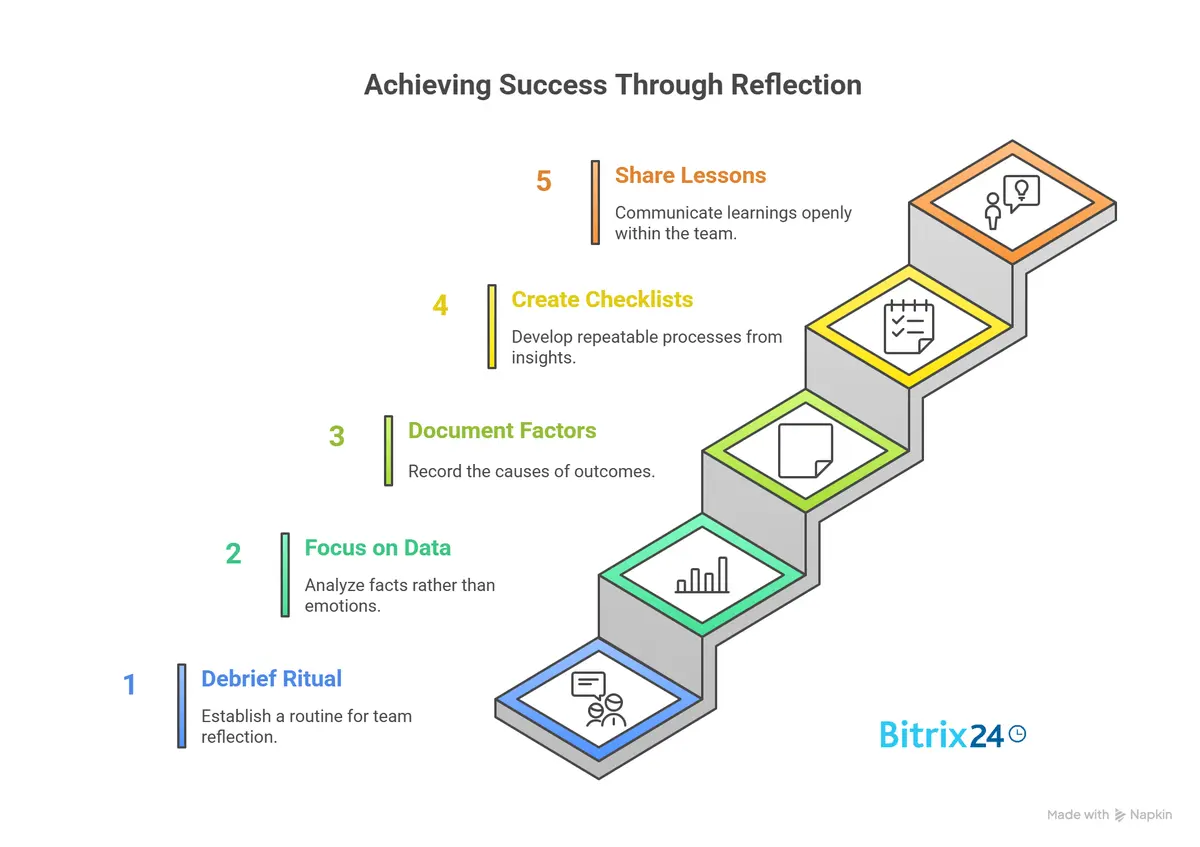
4. Turn Insights into Repeatable Checklists
Knowledge that stays in meeting notes is useless. The real power of reflection for small businesses comes from converting what you learned into tools that prevent repeats. Every significant lesson should become part of your operating system.
Build practical checklists from recurring mistakes. If teams consistently forget to set up analytics tracking before launching campaigns, set up a pre-launch checklist that includes "Verify analytics tags in test environment" as a mandatory step. If client projects regularly hit snags during handoff, develop a project closeout checklist that covers all the transition points.
Integrate these checklists directly into your project management workflow. Modern tools like Bitrix24 let you create task templates with pre-populated checklists that appear automatically when someone starts a new project. This removes the memory burden entirely. The system prompts you to do the right thing at the right time.
Set up automated reminders for time-sensitive checkpoints. If analysis shows that projects reviewed at the 50% completion mark stay on track better, configure an automatic reminder that triggers halfway through the timeline. These gentle nudges prevent small oversights from becoming big problems.
Design decision frameworks for common scenarios. When should we escalate an issue to leadership? What criteria determine whether we should push a deadline or cut scope? Codifying these judgment calls into simple if-then frameworks guides teams toward better decisions under pressure. A post-mortem template for SMB teams should include space for documenting these decision patterns.
Review and update these tools quarterly. As your business evolves, some checklists will become obsolete, while others will need expansion. Assign someone to be responsible for pruning outdated items and adding new lessons. Operational excellence is a living system, not a one-time documentation project. Each update strengthens your SMB post-mortem playbook, and makes it more relevant to current challenges.
The measure of a good checklist isn't its length; it's whether it actually prevents the mistake from happening again. Keep them focused and actionable. Each item should be something someone can verify with a simple yes or no.

5. Share Wins and Lessons Transparently
Learning multiplies when it's shared. That brilliant solution your product team discovered last Tuesday? Your sales team probably faces a similar challenge and has no idea that solution exists. Breaking down information silos is what separates thriving small businesses from struggling ones.
Post debrief summaries where everyone can see them. Your company chat channels, internal dashboards, or team wiki all work well. The format matters less than the visibility. A team growth framework only scales when insights flow freely across departments.
Celebrate both successes and valuable failures openly. When a team experiments with a new approach and it flops, recognize the smart risk-taking even as you document what didn't work. This normalizes experimentation and signals that learning is valued as much as winning. Agile SMBs thrive because they foster cultures that encourage calculated bets.
Include specific details in your shares. "Marketing learned something useful" helps nobody. "Marketing discovered that LinkedIn ads targeting job titles convert 3x better than industry-based targeting, but cost 40% more per click" gives other teams actionable intelligence they can apply to their own work.
Create a searchable repository of simple lessons learned that grows over time. When someone faces a new challenge, they should be able to search past post-mortems for similar situations. This collective memory becomes increasingly valuable as your team grows and new people join who weren't around for the original incidents. The accumulated wisdom in your SMB post-mortem playbook becomes a genuine competitive advantage.
Make sharing part of your team's recognition system. Highlight individuals who contributed valuable insights during debriefs in team meetings or company updates. When people see that honest reflection leads to appreciation rather than criticism, they'll engage more deeply in the process.
Transparency doesn't mean oversharing every detail with clients or external stakeholders. Some lessons are internal operational improvements. But within your team, assume everything should be visible unless there's a specific reason to restrict it. Default to broad visibility.
Making your SMB post-mortem playbook part of everyday work
Building your own SMB post-mortem playbook isn't complicated, but it does require discipline. The businesses that master this habit move faster because they're not constantly relearning the same painful lessons. They're compounding improvements, turning each setback into institutional knowledge that makes the next project smoother.
Small teams have a massive advantage. You don't need approval chains or change management committees to implement what you learn. When your debrief on Tuesday reveals a process gap, you can patch it by Wednesday. That speed of iteration is your competitive edge over larger, slower-moving organizations.
The key is making this routine feel natural rather than bureaucratic. Keep sessions short. Focus on data. Document clearly. Turn insights into tools. Share everything out in the open. These five practices transform "what happened?" from a question people avoid into a springboard for growth.
If you want this rhythm to run itself, Bitrix24 brings the essentials together:
- Task templates with embedded checklists for repeatable steps
- Workflow automation for follow-ups, handoffs, reminders, and approvals
- Shared knowledge base and wikis for lessons learned
- Real-time dashboards for goals, KPIs, and workloads
- Workgroups with roles and permissions for blame-free retros
- Integrated chat, video, and calendars so context stays in one place
- Bitrix24 CoPilot to summarize notes and draft next steps
Ready to make this routine effortless? Start your free Bitrix24 workspace and turn your debriefs into a living post-mortem playbook.
Your all-in-one project management tool!
Plan, execute, and complete projects with Bitrix24, an all-in-one workspace for successful teams. Free forever, unlimited users.
GET BITRIX24 FOR FREEFAQs
What is an SMB post-mortem playbook?
An SMB post-mortem playbook is a lightweight, repeatable process that small and medium-sized businesses use to learn quickly from both successes and setbacks. Unlike corporate post-mortems that involve lengthy reports and multiple stakeholders, this approach focuses on speed and action. It typically includes short debrief sessions, data-driven analysis, clear documentation of root causes, and immediate conversion of insights into practical tools like checklists. The playbook establishes a consistent rhythm, enabling teams to regularly reflect on what happened, why it happened, and how to improve next time, all without adding bureaucratic overhead or slowing down operations.
Should small teams run post-mortems?
Small teams absolutely should run post-mortems, perhaps more than anyone else. When you're operating with limited resources and tight margins, you can't afford to repeat the same mistakes twice. The key difference is scale. Small teams don't need elaborate frameworks or day-long sessions. A focused 30-45 minute debrief after key projects creates a learning rhythm that compounds over time. Teams that skip this step typically find themselves stuck in frustrating cycles, solving the same problems repeatedly. The investment is minimal, but the payoff in improved efficiency and team cohesion is substantial.
How do you keep a post-mortem simple but valuable?
Keeping post-mortems simple starts with a tight agenda: what worked, what didn't, and what changes next. Set a 45-minute maximum and stick to it. Focus discussions on objective data rather than feelings - compare expected versus actual outcomes using real metrics. Document only the patterns and causal factors that matter, not every minor detail. Then immediately convert insights into actionable tools like checklists or process tweaks. The value comes from speed and implementation, not exhaustive analysis. When teams see quick wins from their debriefs, participation and honesty naturally increase.
What can SMBs learn from failure faster?
SMBs learn from failure faster by treating every setback as data, not drama. Start by asking "why" multiple times to reach primary causes instead of stopping at surface symptoms. Document these patterns in a centralized, searchable location so the entire team can access past lessons. Convert recurring issues into preventive checklists and automated reminders that catch problems before they escalate. Share findings transparently across departments so one team's hard lesson becomes everyone's advantage. The real accelerator is creating a blame-free culture where people feel safe admitting what went wrong, enabling honest diagnosis and rapid iteration.